
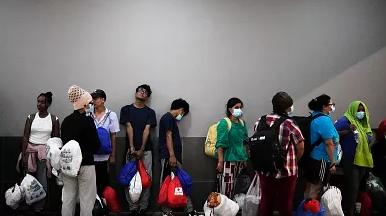
Nineteen West African nationals deported from the United States to Ghana have been moved to undisclosed locations under armed guard, raising alarms about their safety. The migrants arrived in Ghana on November 5 and were initially housed in a hotel. Since being transported in two separate movements, they have been completely unreachable, leaving families and human rights groups deeply concerned.
Attorney Ana Dionne-Lanier, who represents some of the deportees, revealed that part of the group was bused to an unknown border location over the weekend, while others were moved under heavy armed guard on Wednesday. She emphasized that “we don’t know the location of any of them”, highlighting the difficulty families face in contacting their loved ones. Many of the deportees are legally protected from returning to their home countries due to risks of torture or persecution.
Controversial U.S. Deportation Program
The disappearances occur within the context of a largely secretive U.S. deportation program. Since July, the initiative has sent dozens of deportees to at least five African nations, including Eswatini, Rwanda, and South Sudan. Human rights experts have criticized the program, questioning whether migrants receive proper screening before deportation. Concerns have also been raised about potential violations of international protections for asylum-seekers.
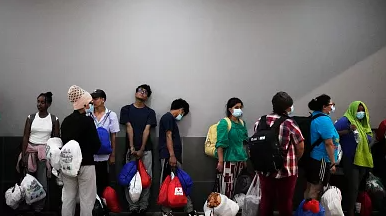
The program represents the U.S. administration’s attempt to remove migrants who cannot easily be returned to their home countries due to court rulings or safety concerns. However, the lack of transparency surrounding these movements has triggered international scrutiny and criticism.
Legal Challenges in Ghana
In response, Ghana’s Democracy Hub rights group filed a lawsuit, claiming that the agreement with the U.S. is unconstitutional. The group argues that the deal bypassed parliamentary approval and may violate international conventions that prevent returning people to countries where they could face persecution.
Meanwhile, the U.S. Department of Justice has stated in federal court that it does not control how another country treats deportees, despite obtaining Ghana’s pledge that the migrants would not be sent back to their home countries. As a result, the fate of the nineteen deportees remains uncertain, creating diplomatic and legal tensions between the United States and Ghana.
Growing Concerns for Human Rights
The situation has alarmed human rights organizations across the globe. Advocates warn that the migrants’ rights could be compromised while in undisclosed locations. They are urging both governments to provide transparency, safety, and immediate access to legal representation.
Families of the deportees have described the situation as frustrating and frightening, as they struggle to contact loved ones and learn about their well-being. Observers note that how Ghana and the U.S. handle this case could have significant implications for future deportation agreements and the treatment of migrants in the region.
Conclusion
The uncertainty surrounding the nineteen deported West Africans highlights the risks associated with secretive deportation programs. While the U.S. aims to remove migrants who cannot safely return home, the lack of clear communication and transparency has left families and human rights groups deeply concerned. The coming days will be critical in determining whether the migrants’ safety can be assured and whether international human rights standards will be upheld.