
The Trump administration has begun ending foreign aid programs that were previously classified as lifesaving, triggering alarm among humanitarian groups and policy experts. According to an internal U.S. State Department email, the decision is based on a reassessment of whether humanitarian assistance aligns with U.S. national interests.
This marks a significant escalation in the administration’s long-running rollback of foreign aid, particularly across Africa, and signals a fundamental change in how Washington defines its global humanitarian role.
A New Phase in the USAID Rollback
Nearly a year after dismantling large parts of the U.S. Agency for International Development (USAID), the administration has launched a new round of aid cuts. This time, the focus is not on controversial or disputed programs but on initiatives previously protected because they were deemed essential to saving lives.
According to the internal communication dated February 12, humanitarian projects in several African countries will not be renewed. Instead, they will be allowed to expire quietly over the coming months.
Notably, these programs had already passed earlier internal reviews and were scheduled to receive funding through September. However, the administration reversed course before renewal deadlines.
Seven African Countries Lose All U.S. Humanitarian Aid
The State Department email confirms a “responsible exit” from humanitarian assistance in seven African nations:
Unlike previous aid suspensions in Afghanistan and Yemen, officials did not cite terrorism, corruption, or diversion of funds as reasons for the decision.
Instead, the justification was blunt.
The email states that these programs lack “a strong nexus between the humanitarian response and U.S. national interests.”
This wording suggests a shift away from humanitarian need as a primary driver of aid decisions.
Aid Redirected, Not Fully Eliminated, in Nine Countries
While seven nations face total withdrawal, the administration plans to redirect — rather than end — funding in nine other countries:
In these cases, officials plan to narrow assistance to programs that directly support U.S. strategic goals, such as regional stability, counterterrorism, or migration control.
However, humanitarian organisations warn that redirected aid often results in fewer services reaching vulnerable communities.
From Humanitarian Need to Strategic Interest
Historically, U.S. humanitarian aid has operated on the principle that saving lives strengthens global stability and moral leadership. This policy shift redefines that approach.
Under the new framework, aid must demonstrate clear benefits to U.S. geopolitical, economic, or security interests.
Supporters of the move argue that American taxpayers should not fund programs that lack strategic returns. Critics counter that humanitarian crises, left unaddressed, often lead to conflict, displacement, and instability that later demand costly intervention.
Lessons From Afghanistan and Yemen
Earlier in the year, the administration canceled all humanitarian aid to Afghanistan and Yemen. In those cases, the State Department argued that extremist groups were diverting resources.
However, the newly affected African countries face no such allegations. This distinction has intensified criticism, as observers see the latest cuts as policy-driven rather than risk-based.
Aid experts warn that the precedent could lead to further withdrawals in regions facing famine, disease outbreaks, or displacement.
Impact on Millions of Vulnerable People
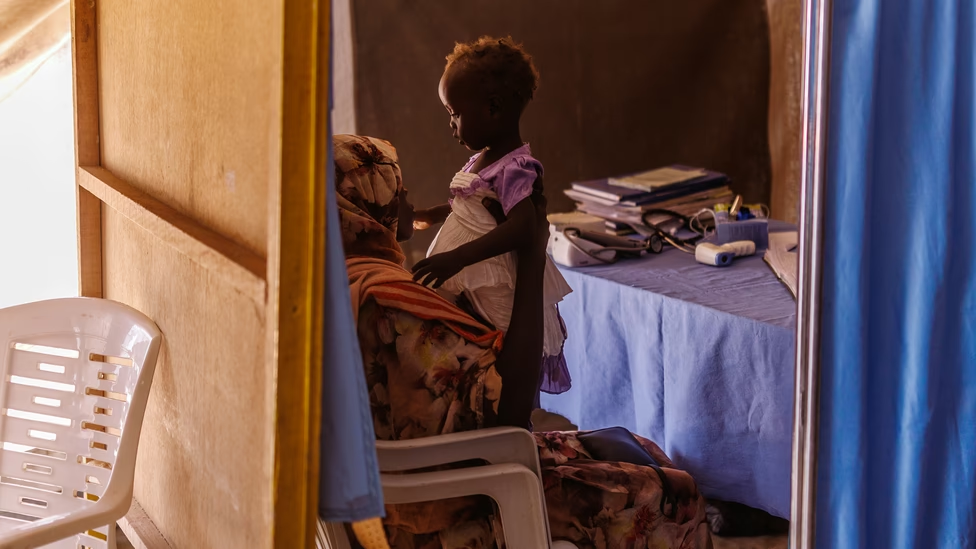
Humanitarian agencies say the affected programs include food aid, emergency healthcare, nutrition support, and clean water initiatives.
In countries such as Somalia and Niger, where climate shocks and conflict have already weakened safety nets, the loss of U.S. funding could have immediate consequences.
According to aid groups, these programs often serve as the backbone of local humanitarian responses, supporting millions of people who have no alternative access to care.
Humanitarian Groups Sound the Alarm
Relief organisations argue that allowing lifesaving programs to “expire” rather than openly cancel them reduces transparency and public accountability.
They also warn that sudden funding gaps disrupt supply chains, force clinic closures, and lead to preventable deaths.
Former USAID officials note that humanitarian outcomes often align with long-term U.S. interests, even when short-term strategic benefits are not obvious.
Congressional and Global Reactions
While the administration has not publicly announced the changes, lawmakers from both parties are beginning to raise concerns.
Several members of Congress have questioned whether the executive branch is overstepping its authority by dismantling aid programs without legislative oversight.
International partners, meanwhile, worry that the U.S. retreat could leave a vacuum filled by rival powers, particularly in Africa.
A Redefinition of America’s Global Role
At its core, the decision reflects a deeper debate about America’s place in the world.
Is humanitarian aid a moral obligation, a strategic tool, or a luxury to be discarded when budgets tighten?
By tying aid strictly to national interest, the administration is reshaping decades of U.S. foreign policy doctrine — with consequences that may extend far beyond the countries immediately affected.
What Happens Next?
Aid programs scheduled for renewal will now lapse between now and September unless reversed. Humanitarian groups are lobbying Congress to intervene, while legal experts explore whether the cuts violate existing appropriations laws.
Meanwhile, millions of people across Africa face growing uncertainty as clinics, food programs, and emergency services prepare for funding losses.
Frequently Asked Questions (FAQs)
The administration says the programs no longer align with U.S. national interests.
Are funds being cut due to misuse?
No evidence of diversion or misuse was cited for the seven African countries affected.
Which countries lose all aid?
Burkina Faso, Cameroon, Malawi, Mali, Niger, Somalia, and Zimbabwe.
No. Funding will be redirected in nine other African nations.
Final Analysis
This policy shift represents one of the most consequential changes to U.S. humanitarian assistance in decades. While framed as a strategic realignment, its real-world impact will be measured in human lives.
As global crises multiply, the long-term costs of retreating from humanitarian leadership may outweigh the short-term savings — both for vulnerable populations and for U.S. influence abroad.