
Ethiopia is once again edging toward renewed conflict in its northern Tigray region. Across towns and villages, daily life shows clear warning signs. Residents queue at banks running out of cash. Shops struggle to restock food. Prices rise quickly, and families rush to buy essentials.
As a result, fear is spreading fast. Over the past year, people in Tigray have faced at least three similar scares. Each time, they worried that another war was about to begin. Many still remember the devastating conflict between 2020 and 2022, when hundreds of thousands of lives were lost.
Memories of war still shape daily life
The previous war left deep scars across Tigray. Families lost relatives, homes, and livelihoods. Although fighting officially ended in 2022, recovery has remained slow and uneven.
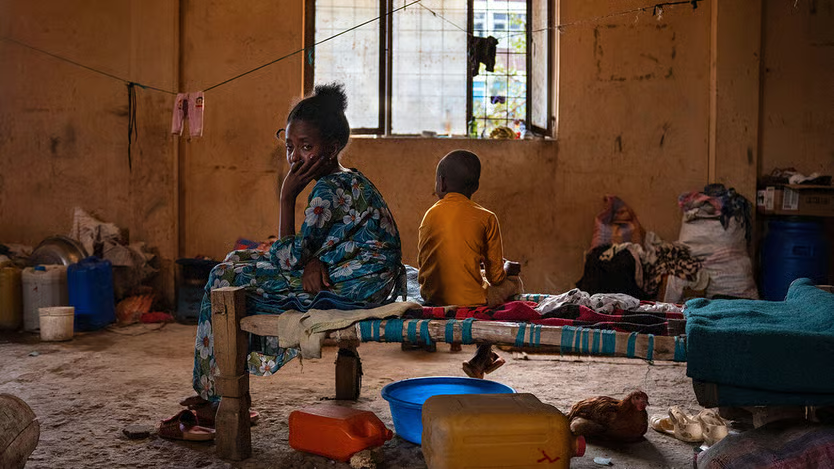
Moreover, many displaced people still live in temporary camps. Access to healthcare, banking, and basic services remains fragile. Because of this, even small political shocks quickly trigger panic.
January clashes raise fresh alarm
Tensions rose sharply in late January. On January 29, clashes broke out between the Ethiopian army and forces linked to the Tigray People’s Liberation Front (TPLF).
Soon after, the federal government suspended all flights into and out of Tigray. This move immediately cut off the region and increased anxiety among residents.
Drone strikes deepen uncertainty
Two days later, government drones struck targets deep inside central Tigray. These attacks marked a dangerous escalation.
Tigray’s interim president, Tadesse Werede, warned that the situation looked like “an all-out war.” His statement reflected widespread concern that violence could spiral out of control.
Temporary calm follows withdrawals
However, a full-scale war did not break out. Tadesse later confirmed that Tigrayan forces withdrew from several contested areas.
He stressed that dialogue, not fighting, offered the best path forward. As a result, flights to Tigray resumed on February 3, easing immediate pressure.
Political rhetoric keeps tensions high
Despite this pause, the risk of renewed violence remains serious. Political language has grown harsher on both sides.
In a speech to parliament, Prime Minister Abiy Ahmed accused the TPLF of working against Ethiopia’s unity. Meanwhile, TPLF officials warned that the army was mobilising in large numbers.
Roots of the crisis run deep
To understand today’s tensions, it is important to look back. After taking office in 2018, Abiy Ahmed moved quickly to weaken the TPLF’s influence.
At the same time, he formed alliances with groups that opposed the TPLF, including militias from the Amhara region. These alliances later played a key role in the 2020 war.
Western Tigray remains unresolved
During the conflict, Amhara militias took control of Western Tigray. They forced many Tigrayan residents to flee their homes.
Although a peace deal in 2022 promised talks and returns, progress stalled. Many displaced families still fear going back because of threats and intimidation.
Troop movements trigger suspicion
Last week, TPLF forces crossed the Tekeze River into Tselemti. Officials said they wanted to raise concerns about the treatment of returning civilians.
However, analysts believe the move may have served military goals. For example, it may have tested army positions or secured key routes.
Federal fears grow
Prime Minister Abiy has long feared that the TPLF aims to retake Western Tigray by force. Control of the area could open supply routes to Sudan.
Therefore, the government appears to have viewed the troop movement as a serious threat. Reports now suggest that federal forces are reinforcing positions around Tigray.
Civilians brace for the worst
Meanwhile, civilians once again feel trapped between political decisions and military actions. Even brief disruptions cause shortages and fear.
Aid workers warn that another conflict would deepen hunger, displacement, and economic stress across northern Ethiopia.
Fragile calm, uncertain future
For now, Ethiopia has avoided a return to full war. Still, the calm remains fragile.
Unless leaders choose dialogue over confrontation and address unresolved disputes, the risk of renewed conflict will continue to hang over Tigray.