
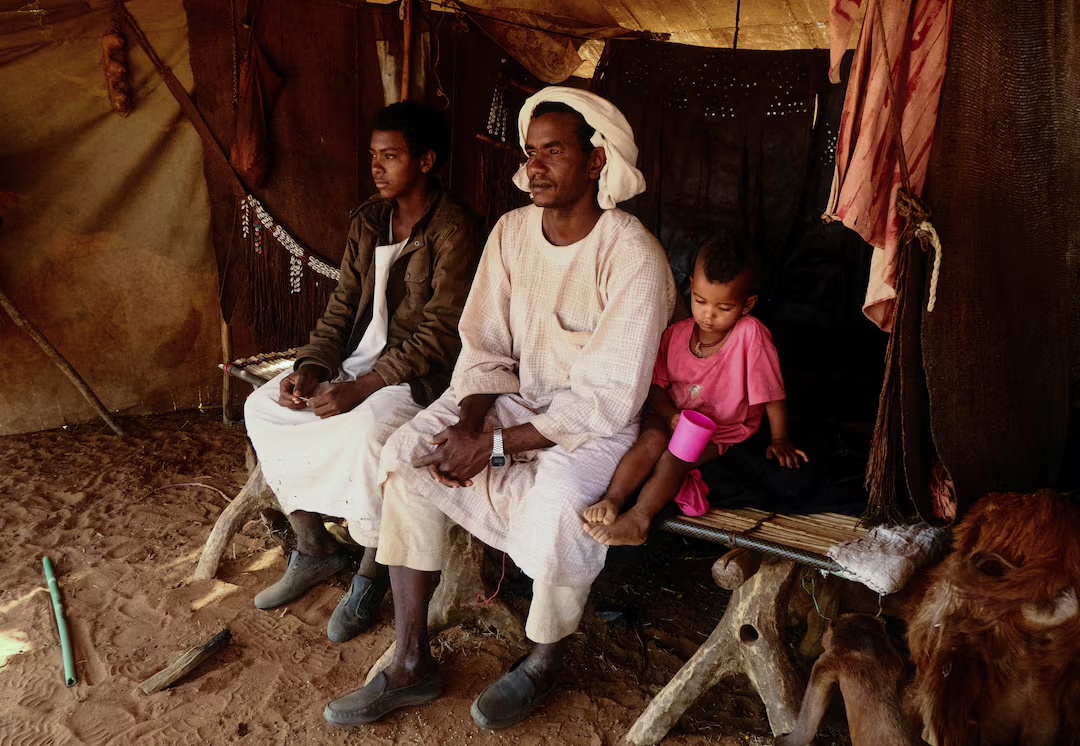
For generations, Sudanese nomads moved freely across vast desert lands, guided by seasons, water sources, and pasture. Their way of life depended on open routes, shared markets, and peaceful coexistence with farming communities.
Today, that freedom is gone. Since war broke out in Sudan in 2023, thousands of nomadic families now find themselves trapped, exposed to violence, and cut off from livelihoods that once sustained them.
Life Before the War
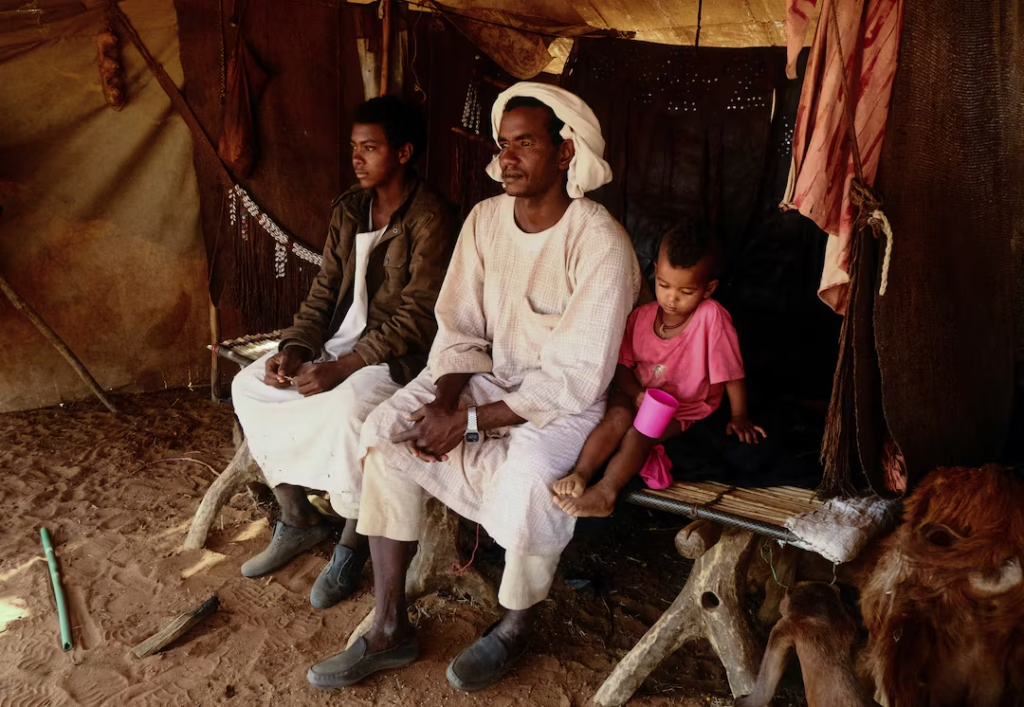
Gubara al-Basheer remembers a different Sudan. He and his family travelled with camels and livestock, moving between grazing lands and busy markets without fear.
Nomads relied on long-established agreements that regulated land use and livestock movement. These unwritten rules helped prevent conflict and allowed communities to survive in harsh environments.
Markets served as neutral spaces. People traded animals, grain, and supplies regardless of ethnic background.
War Brings Fear and Isolation
That balance collapsed when fighting spread across the country. Al-Basheer and others now live stranded outside the city of al-Obeid in North Kordofan State.
Once a key trading hub, al-Obeid has become a frontline area. Heavy fighting has closed roads and destroyed markets.
“We used to move as we wanted,” al-Basheer said. “Now there is no choice, and no side accepts you.”
Ethnic Tensions Deepen the Crisis
Researchers say the war has revived ethnic divisions that had remained fragile but manageable for years.
Local analyst Ibrahim Jumaa explained that online misinformation and hate speech have fueled suspicion between communities.
Nomads say they are now viewed with hostility by groups they once lived beside peacefully.
“In the past, no one rejected anyone,” al-Basheer said. “Now it is dangerous everywhere.”
Banditry Targets Livestock
Beyond the fighting, bandit attacks have become a major threat. Armed groups roam rural areas, stealing animals and kidnapping herders.
Livestock is everything to nomads. It provides food, income, and social status.
Hamid Mohamed, another herder near al-Obeid, said moving even short distances is risky. “If we try to travel, we get robbed,” he said.
Collapse of Traditional Grazing Routes
Nomads depend on seasonal migration routes that avoid overgrazing and allow land to recover.
The war has blocked these paths. Armed checkpoints, looting, and fear prevent movement.
Without access to fresh pasture, animals weaken or die. Families sink deeper into poverty.
Experts warn that long-term damage to land use systems could outlast the war itself.
Millions Affected Nationwide
Jumaa estimates that millions of nomads across Sudan now face similar conditions.
These communities often live far from government services. When conflict spreads, they have little protection.
Aid agencies struggle to reach them because of insecurity and limited access.
As a result, many nomads remain invisible in national discussions about the humanitarian crisis.
RSF and Ethnic Violence
The Rapid Support Forces (RSF) emerged from Arab militias known as the Janjaweed, accused of mass violence in Darfur in the early 2000s.
During the current conflict, the RSF has faced accusations of ethnic killings, particularly against non-Arab communities in West Darfur.
The group denies these claims and says it will hold abusers accountable.
However, rights groups say patterns of violence mirror past atrocities.
Armed Alliances Increase Insecurity
Throughout the war, the RSF has formed links with other armed groups and tribal militias.
In some areas, these alliances have allowed fighters to loot villages and abduct civilians with little resistance.
Nomads say such actions have worsened mistrust and blurred lines between combatants and civilians.
Many fear being targeted simply because of their identity.
Loss of Neutral Space
Historically, nomads avoided taking sides in conflicts. Mobility allowed them to escape trouble.
Now, staying neutral has become impossible.
“No side accepts you,” al-Basheer said. “Everyone suspects you.”
This loss of neutrality leaves nomads exposed to violence from multiple directions.
Economic and Social Impact
With markets closed and animals stolen, families struggle to survive.
Children drop out of school. Healthcare becomes unreachable.
Some nomads abandon traditional life and move to overcrowded towns, where they face poverty and discrimination.
Others refuse to leave, hoping conditions will improve.
Risk of Long-Term Fragmentation
Analysts warn that prolonged displacement could permanently alter Sudan’s social fabric.
When nomads lose land access, disputes increase. Communities turn inward.
This fragmentation makes reconciliation harder, even after fighting ends.
Calls for Protection and Dialogue
Experts say protecting migration routes is key to stabilising rural Sudan.
They urge all parties to respect traditional land agreements and allow safe passage for civilians.
Community dialogue, supported by neutral mediators, could help reduce tensions.
However, without an end to the war, such efforts remain fragile.
An Uncertain Future
For now, nomads like al-Basheer wait in limbo. They cannot move forward or return to the life they knew.
The desert that once offered freedom now feels like a prison.
As Sudan’s war drags on, the fate of its nomadic communities highlights a deeper truth: when conflict destroys trust and movement, it threatens not just lives, but entire ways of life.