
The United Nations has issued its strongest warning yet on the conflict in Sudan, saying atrocities committed during the siege and capture of the city of El-Fasher show clear signs of genocide.
A UN fact-finding mission concluded that the actions carried out by Sudan’s paramilitary Rapid Support Forces (RSF) go beyond war crimes and point to an intent to destroy specific ethnic communities.
The findings relate to events in El-Fasher, a key city in Darfur, which fell to RSF fighters in late October after an 18-month siege.
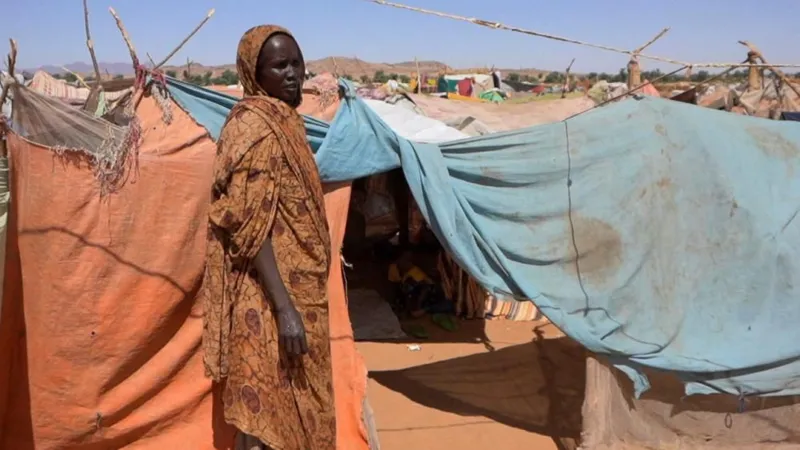
El-Fasher Siege Marks One of War’s Darkest Chapters
The capture of El-Fasher followed months of blockade that cut off food, water, and humanitarian aid to civilians.
Residents were trapped under extreme conditions, with starvation used as a weapon to weaken the population before the final assault.
The UN says this period marked one of the most brutal phases of Sudan’s nearly three-year civil war and shocked the international community.
UN Investigators Cite Clear Evidence of Genocidal Acts
According to the UN mission, evidence collected from survivors, witnesses, and documentation leaves little room for doubt.
The report cites mass killings, sexual violence, torture, enforced disappearances, and systematic humiliation of civilians.
“These actions leave only one reasonable conclusion,” said mission expert Mona Rishmawi, adding that the RSF acted with intent to destroy parts of the Zaghawa and Fur communities.
Targeted Ethnic Groups in Darfur
The report identifies the Zaghawa and Fur ethnic groups as primary targets during the assault on El-Fasher.
Investigators say RSF fighters failed to distinguish between civilians and armed defenders, leading to indiscriminate violence.
Thousands were reportedly killed, raped, or disappeared during what the UN described as “three days of absolute horror.”
Legal Threshold for Genocide Met, UN Says
The UN concluded that at least three acts that legally qualify as genocide were committed.
These include killing members of a protected group, causing serious physical and psychological harm, and deliberately creating conditions meant to destroy the group.
Such findings place the situation among the gravest crimes under international law.
UK Pushes for Accountability at UN Security Council
UK Foreign Secretary Yvette Cooper described the findings as “truly horrific” and said the report would be presented to the UN Security Council.
She called for international criminal investigations to ensure justice for victims and accountability for those responsible.
Cooper also urged an end to arms supplies that continue to fuel the conflict.
Roots of Sudan’s Civil War
Sudan’s war began in April 2023 following a power struggle between the national army and the RSF.
The conflict erupted over disagreements on how and whether the RSF should be integrated into state security forces.
Over time, the fighting spread nationwide, driven by long-standing political, ethnic, and economic tensions.
Darfur’s History of Mass Violence
Darfur has a painful history of ethnic violence dating back more than two decades.
Arab militias, some linked to the current RSF leadership, were responsible for massacres under the former regime of Omar al-Bashir.
The UN notes that today’s atrocities echo past crimes but are unfolding on an even more lethal scale.
RSF Leadership Named in UN Report
The report names RSF leader Lt Gen Mohamed Hamdan Dagalo, known as Hemedti, and spokesperson Lt Col Al-Fatih Al-Qurashi.
Investigators cited public statements where senior leaders appeared to claim or celebrate the takeover of El-Fasher.
While Hemedti acknowledged “violations,” the UN says no credible steps were taken to stop abuses or punish perpetrators.
Lack of Cooperation Hampers Justice
The UN mission says it received little to no cooperation from RSF leaders or Sudanese authorities.
Requests for clarification on investigations or accountability measures went unanswered.
UK officials called the lack of cooperation from both sides of the conflict “shameful and unacceptable.”
Role of Foreign Support Raises Alarm
Although the mission did not formally investigate external actors, it noted that RSF operations were reinforced by foreign mercenaries.
These fighters were reportedly equipped with advanced weapons and communication systems.
Investigators said they are engaging several states over “credible information” of foreign involvement.
UAE’s Role Under Scrutiny
The United Arab Emirates has been widely reported as a key backer of the RSF, though it strongly denies the claims.
International investigations have previously described evidence of UAE support as credible.
Despite this, the UN and major powers have so far avoided direct public pressure on Abu Dhabi.
Calls for Arms Embargo and Sanctions
The UN report urges full enforcement of the existing arms embargo on Darfur.
It also recommends expanding the embargo to cover the entire country.
Other measures include targeted sanctions, cooperation with the International Criminal Court, and creation of new judicial mechanisms.
Sexual Violence Described as a Weapon of War
Investigators highlighted widespread sexual violence as a central feature of the RSF campaign.
Yvette Cooper described it as “a war against women’s bodies,” calling for stronger international action to protect survivors.
Support for victims and access to humanitarian aid remain urgent priorities.
Risk of Further Genocide Remains High
The UN warns that without prevention and accountability, the risk of further genocidal acts remains “serious and ongoing.”
Investigators say warning signs were present long before El-Fasher fell, but the world failed to act in time.
They stress that delayed action could lead to more mass atrocities.
Global Pressure Needed for Ceasefire
The UN Security Council session aims to push for a humanitarian truce.
Despite massive civilian suffering, both sides continue fighting with increasingly sophisticated weapons.
Foreign backing allows the war to continue despite global condemnation.
“The World Is Still Failing Sudan”
UK Foreign Secretary Cooper warned that global inaction has allowed the crisis to worsen.
She said the horrors of El-Fasher should have been a turning point.
Instead, violence continues, leaving millions at risk as the international community struggles to respond.