
Life expectancy across Africa continues to show wide differences, reflecting long-standing gaps in healthcare access, disease control, income levels, and living conditions. New 2025 data highlights how some African countries are making steady progress, while others still face major health and development challenges that shorten average lifespans.
Life expectancy refers to the average number of years a person is expected to live, based on current mortality trends. It is often used as a broad indicator of a country’s overall health system, nutrition levels, education, sanitation, and economic stability. Across Africa, these factors differ sharply from one country to another, helping explain the uneven outcomes seen today.
While Africa has recorded significant gains in life expectancy over the past two decades, progress has not been uniform. Countries that have invested consistently in healthcare, disease prevention, and social services tend to perform better, while those affected by conflict, poverty, and weak infrastructure continue to lag behind.
North Africa and Island States Lead the Rankings
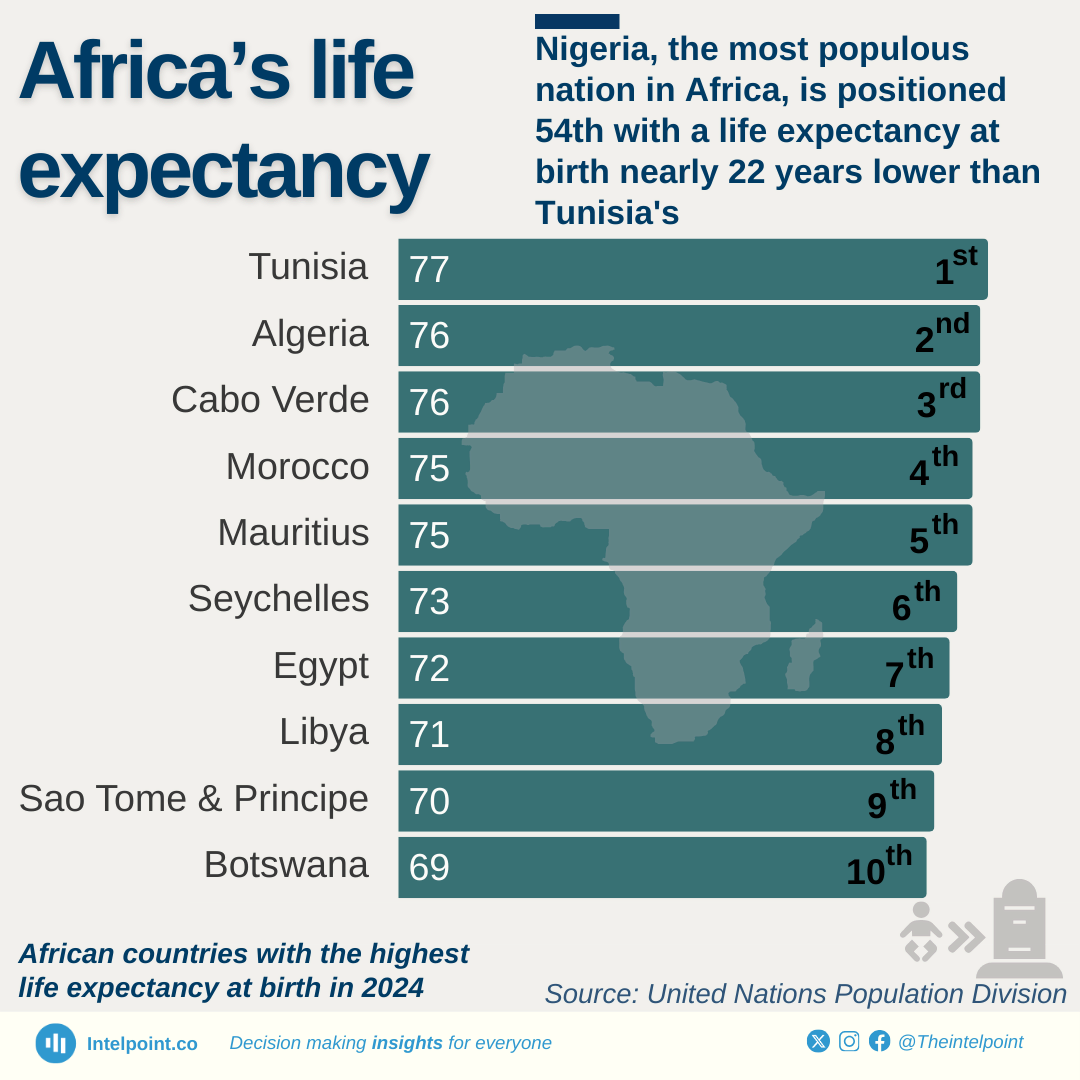
According to the latest figures, Algeria tops the continent with an average life expectancy of 77 years. Algeria’s strong performance is linked to relatively good access to healthcare, expanded vaccination coverage, and sustained public investment in health and social services.
Following Algeria are Libya and Seychelles, both averaging 73 years. Despite political instability in recent years, Libya still benefits from earlier investments in health and education. Seychelles, a small island state, consistently ranks highly due to universal healthcare access, high living standards, and effective disease control.
Egypt ranks fourth with a life expectancy of 72 years. Egypt’s large healthcare system, improved maternal and child health services, and expanded treatment for chronic diseases have helped raise average lifespans, even as population pressures remain a challenge.
Countries With Life Expectancy Around 69 to 68 Years
Several African countries cluster around the upper-middle range of life expectancy. Botswana and Mauritania both average about 69 years. Botswana’s gains are particularly notable given its past struggle with HIV/AIDS, showing the impact of strong treatment and prevention programmes.
At 68 years, Ethiopia and Namibia demonstrate steady progress. Ethiopia’s improvements are linked to expanded primary healthcare and community health programmes, while Namibia benefits from relatively strong health services compared to many countries in the region.
These figures show that consistent investment and policy focus can yield results, even in countries facing economic or geographic challenges.
Countries in the Mid-60s Bracket
Several countries fall into the mid-60s range, reflecting mixed health outcomes. Sudan and Zambia both average 67 years. Ongoing conflict and economic stress in Sudan, alongside health system pressures, continue to affect life expectancy.
South Africa records an average life expectancy of 66 years. Despite having some of the most advanced medical facilities on the continent, South Africa’s figures are weighed down by high levels of inequality, chronic disease, and the long-term effects of HIV/AIDS.
At 65 years, Angola reflects both progress and persistent challenges. Years of conflict damaged health infrastructure, but post-war recovery has gradually improved outcomes.
Kenya, Madagascar, and the Lower End of the Top 15
Kenya and Madagascar both record a life expectancy of 64 years. In Kenya, improvements in maternal health, HIV treatment, and child survival have helped raise life expectancy, though gaps in rural healthcare access remain.
Madagascar faces challenges linked to poverty, malnutrition, and limited healthcare coverage, particularly in remote areas. Environmental shocks, including cyclones and droughts, also affect health outcomes and food security.
Zimbabwe records the lowest life expectancy among the top 15 at 63 years. Economic instability, health worker shortages, and constrained public services continue to impact longevity, despite some recent improvements.
Key Factors Shaping Life Expectancy in Africa
Several common factors continue to influence life expectancy across the continent. High infant and maternal mortality rates remain a major challenge in many countries, significantly lowering average lifespan figures.
Infectious diseases such as malaria, tuberculosis, and HIV/AIDS still account for a large share of deaths, especially where prevention and treatment services are limited. At the same time, non-communicable diseases like diabetes, heart disease, and cancer are rising, placing new pressure on health systems that were designed mainly to fight infections.
Limited access to clean water, sanitation, and nutrition also plays a major role. Poor living conditions increase vulnerability to disease and reduce overall quality of life, particularly for children and the elderly.
The Role of Healthcare Systems and Policy
Countries with higher life expectancy generally have stronger primary healthcare systems, wider vaccination coverage, and better access to essential medicines. Investment in health workers, clinics, and hospitals is a critical driver of longer lifespans.
Public health policies that focus on prevention, early diagnosis, and long-term disease management have proven especially effective. Family planning, maternal care, and child health programmes also deliver strong returns by reducing early deaths.
Education, especially for women and girls, is closely linked to improved health outcomes. Better-educated populations tend to make healthier choices, access healthcare earlier, and support improved nutrition and sanitation.
Progress and Remaining Gaps
Africa has made meaningful progress in raising life expectancy since the early 2000s, driven by improved HIV treatment, expanded immunisation, and better disease control. However, the pace of improvement has slowed in some regions due to conflict, climate shocks, and economic stress.
Large gaps between countries highlight the uneven distribution of resources and opportunities. While some nations approach life expectancy levels seen in middle-income countries, others remain far behind global averages.
Bridging these gaps will require sustained investment, regional cooperation, and policies that address both health systems and the broader social factors that shape wellbeing.
Looking Ahead
Life expectancy remains one of the clearest indicators of Africa’s development journey. The 2025 data shows that progress is possible, but not guaranteed. Countries that prioritise healthcare access, disease prevention, and social protection continue to see better outcomes.
As populations grow and health needs evolve, African governments face the challenge of building resilient health systems that can handle both infectious and chronic diseases. If these challenges are met, the continent could see further gains in life expectancy over the coming decades, narrowing the gap between African countries and the rest of the world.