
Khaleda Zia, Bangladesh’s first female prime minister and one of the country’s most influential political figures, has died at the age of 80 after a long illness. Her death marks the end of an era in Bangladeshi politics that was shaped for decades by rivalry, protest, and deep political division.
Zia passed away early on Tuesday morning at Evercare Hospital in Dhaka, where she had been receiving treatment for several serious health conditions. Doctors had said just a day earlier that her condition was extremely critical and that she had been placed on life support.
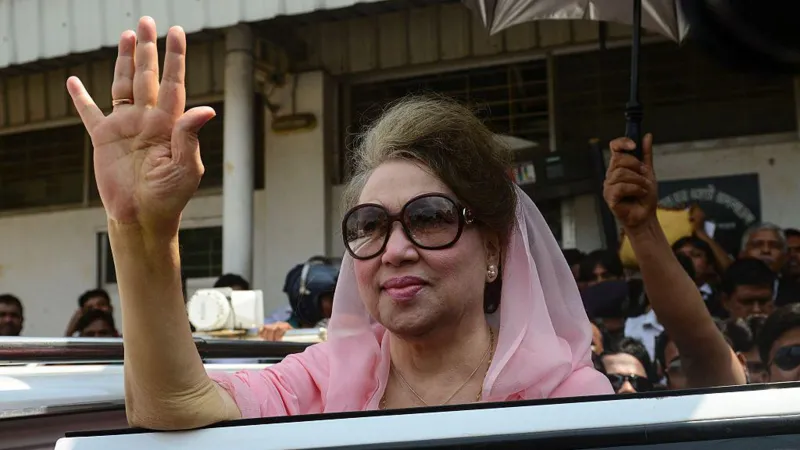
Her party, the Bangladesh Nationalist Party (BNP), confirmed her death in a statement posted on social media.
“Our beloved leader is no longer with us. She passed away at 6am this morning,” the party said.
A Historic Political Figure
Khaleda Zia made history in 1991 when she became Bangladesh’s first female prime minister. She led the BNP to victory in the country’s first democratic election in 20 years, following a long period of military rule.
Her election was seen as a major breakthrough in a male dominated political system. It also marked the return of parliamentary democracy in Bangladesh.
Zia served as prime minister three times from 1991 to 1996, briefly in 1996, and again from 2001 to 2006.
Health Struggles in Her Final Days
Zia had been hospitalised for more than a month. Doctors treated her for kidney damage, heart disease, and pneumonia, among other conditions. Given her age and poor overall health, physicians said they could not provide multiple treatments at the same time.
Despite her declining health, the BNP had earlier announced that Zia planned to contest the next general election, expected in February. The vote would have been the first since a popular uprising forced her long-time rival, Sheikh Hasina, out of power.
Crowds Gather as News Breaks
After news of Zia’s death spread, large crowds gathered outside Evercare Hospital. Supporters tried to enter the hospital grounds, prompting police to step in and control the situation.
Many mourners wept openly, while others chanted slogans in her memory. For supporters, Zia remained a symbol of resistance and democratic struggle until the very end.
From First Lady to Political Leader
Zia first entered public life as the wife of Ziaur Rahman, Bangladesh’s former president and military leader. She was initially seen as a quiet and reserved figure.
After her husband was assassinated in a 1981 military coup, Zia gradually stepped into politics. She later took charge of the BNP and rose to become one of the most powerful leaders in the country.
In the 1980s, she gained respect for refusing to take part in elections organised under military ruler General Hussain Muhammad Ershad, which she described as unfair.
Achievements and Criticism
Zia’s first term as prime minister was widely praised. Her government worked to improve women’s education, social development, and democratic institutions. Parliament restored democracy by amending the constitution with support from both major parties.
Her second term in 1996 lasted only a few weeks. It faced strong criticism after her government held elections without opposition participation. Parliament later approved a neutral caretaker system before dissolving itself.
Zia returned to power in 2001, serving until 2006. That period was marked by economic challenges and allegations of corruption. She strongly denied all accusations, saying they were politically motivated.
Bitter Rivalry That Shaped a Nation
For more than three decades, Bangladeshi politics was dominated by the fierce rivalry between Khaleda Zia and Sheikh Hasina. The two women alternated between government and opposition, often refusing to work together.
Their feud deeply divided the country and shaped its political culture.
Zia boycotted the 2014 election after Hasina removed the caretaker government system. Zia later faced corruption convictions and was sent to prison. She denied wrongdoing and said the cases were meant to silence her.
Final Years and Political Legacy
Zia was released from prison last year, shortly after mass protests forced Hasina into exile. Despite her poor health, she remained a symbolic leader of the opposition.
Her son, Tarique Rahman, is expected to lead the BNP if the party returns to power. Rahman, 60, returned to Bangladesh only last week after 17 years in self-imposed exile in London.
Family members, including Rahman, were by Zia’s side during her final moments.
Tributes from Home and Abroad
Interim leader Muhammad Yunus called Zia a “symbol of the democratic movement” and urged the nation to pray for her.
“The country has lost a great guardian,” Yunus said. “Her struggle for democracy and political freedom will be remembered.”
India’s Prime Minister Narendra Modi also paid tribute, saying he was deeply saddened by her passing and praised her role in strengthening relations between Bangladesh and India.
A Chapter Closes in Bangladesh’s History
Khaleda Zia’s death closes a powerful chapter in Bangladesh’s political story. Loved by supporters and criticised by rivals, she remained one of the country’s most influential leaders.
Even in poor health, she continued to represent opposition politics and democratic resistance.
For millions of Bangladeshis, her legacy will remain tied to the fight for democracy, political pluralism, and women’s leadership in South Asia.