
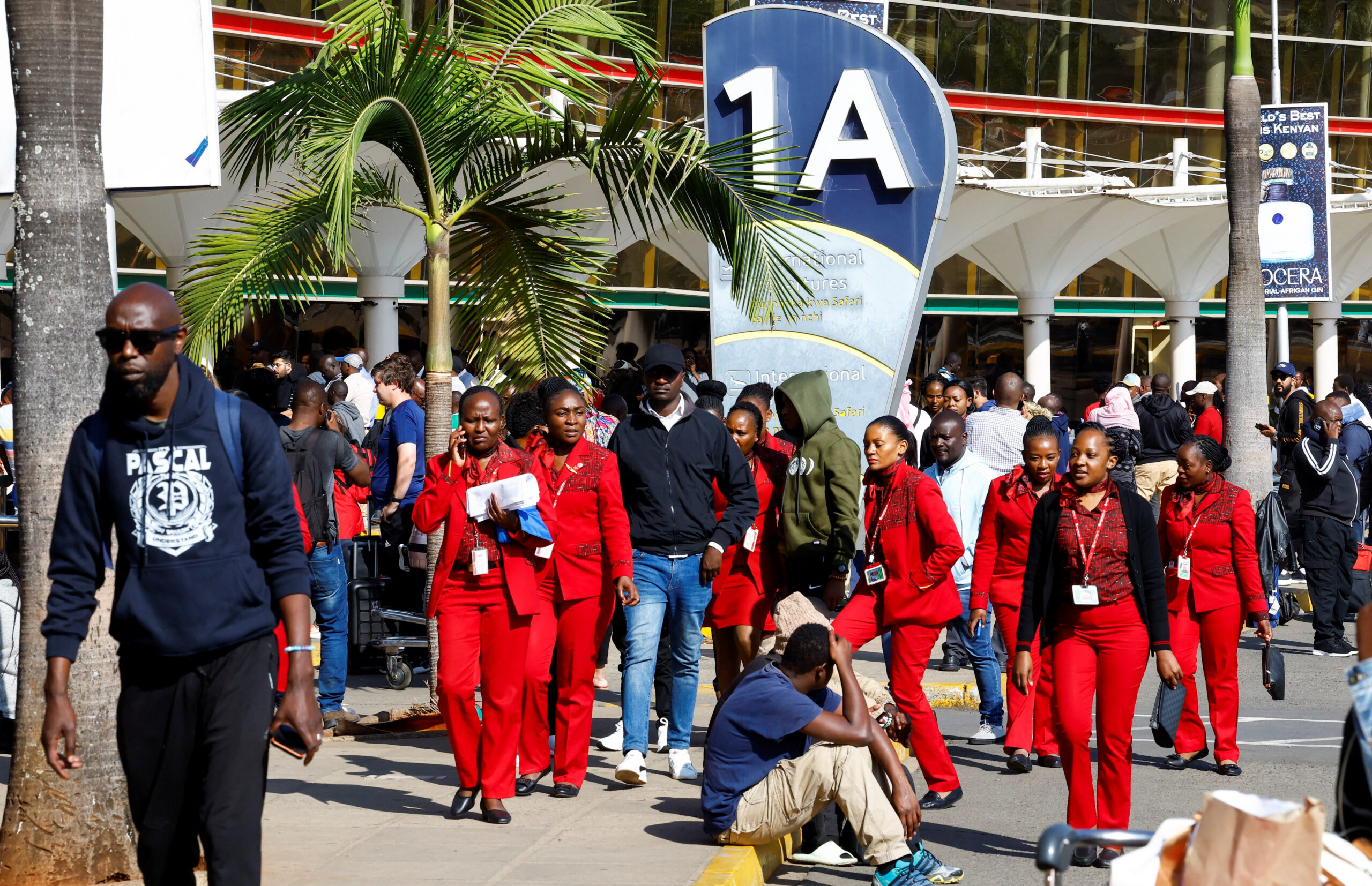
Passengers travelling through Kenya’s main international gateway faced significant disruption on Monday after flight delays hit Jomo Kenyatta International Airport in Nairobi.
According to airport authorities, a labour dispute between aviation workers and the Kenya Civil Aviation Authority triggered the delays.
As a result, air traffic control operations slowed, leading to delayed departures and arrivals.
Consequently, travellers experienced inconvenience, while industry players raised concerns about the broader impact on the aviation sector.
What Caused the Flight Delays?
The Kenya Airports Authority said the ongoing dispute between the aviation workers’ union and the Kenya Civil Aviation Authority caused the delays.
Because of this, staffing levels and coordination in critical airport operations suffered.
Air traffic control services faced the greatest strain, which in turn caused congestion in flight schedules.
Aircraft waited longer than usual for clearance to land or take off.
However, authorities did not immediately disclose the specific demands raised by the workers.
Kenya Airways Confirms Operational Impact
Meanwhile, Kenya Airways confirmed that the dispute affected some of its flights.
The airline said air traffic control delays slowed both departures and arrivals at Jomo Kenyatta International Airport.
As a precaution, the airline advised passengers to expect possible schedule changes.
In addition, it urged travellers to check flight updates before heading to the airport.
Kenya Airways added that it is working closely with airport authorities to minimise disruption.
Passengers Face Inconvenience and Uncertainty
Travellers reported longer waiting times as flight schedules changed throughout the day.
In some cases, passengers missed connecting flights, while others waited for extended periods in departure lounges.
For international travellers, the delays created added pressure, especially for those with tight transit schedules.
Business travellers and tourists were among the most affected.
Meanwhile, airport staff managed crowds and shared updates as the situation developed.
Importance of Jomo Kenyatta International Airport
Jomo Kenyatta International Airport remains the busiest airport in East Africa and a key regional hub.
It handles millions of passengers each year and supports tourism, trade, and business.
Therefore, any disruption at the airport creates ripple effects across the region.
Airlines, cargo operators, and connecting flights to neighbouring countries all feel the impact.
In addition, the airport generates major revenue for Kenya’s aviation and tourism sectors.
Labour Disputes and Aviation Safety
Labour disputes in aviation require careful handling because safety and coordination remain critical.
Air traffic control, in particular, ensures safe aircraft movement at all times.
Although no safety incidents were reported, delays increase pressure on staff and systems.
Authorities stressed that safety remains the top priority despite operational challenges.
Experts say quick resolution helps prevent prolonged disruption.
Calls for Dialogue and Resolution
As tensions rise, industry observers and passenger groups have urged both sides to return to dialogue.
They warn that prolonged disagreements could damage confidence in Kenya’s aviation sector.
Aviation unions often raise concerns about working conditions, staffing, and pay.
On the other hand, authorities must balance these demands with operational and budget limits.
As talks continue, pressure is mounting to restore normal operations.
Economic Impact of Flight Disruptions
Flight delays affect more than passengers alone.
For example, airlines incur extra costs from fuel use, crew overtime, and schedule changes.
Similarly, tourism businesses suffer when delays disrupt travel plans and hotel bookings.
Cargo operations also face challenges, especially for time-sensitive goods.
Kenya’s Aviation Sector Under Pressure
Kenya’s aviation sector continues to recover from earlier shocks, including the pandemic and rising costs.
Therefore, any new disruption risks slowing that recovery.
Analysts note that labour relations will play a key role in maintaining long-term stability.
Without cooperation, future disruptions may become more frequent.
Government and Regulatory Role
The Kenya Civil Aviation Authority regulates aviation safety and air navigation services.
Because of this, labour disputes involving the authority attract national attention.
Observers expected government officials to step in if talks stalled.
So far, no official government statement has been issued.
Passengers Advised to Stay Informed
In the meantime, airlines advised passengers to remain patient and stay informed.
Travellers were encouraged to arrive early and monitor official flight updates.
In some cases, airlines offered flexible rebooking options depending on ticket rules.
Customer service desks remained busy handling inquiries.
Regional and International Implications
As a regional hub, Nairobi’s airport disruption affects flights across Africa and beyond.
Consequently, international airlines that rely on Nairobi as a transit point may face challenges.
Such disruptions can strain partnerships and codeshare agreements.
For this reason, smooth operations remain critical for Kenya’s global aviation standing.
Lessons From Past Disruptions
Kenya has faced similar aviation disruptions before, often linked to labour disputes.
These incidents show the need for strong labour relations frameworks.
Experts recommend proactive engagement and clear communication.
In addition, investment in staffing, training, and working conditions supports long-term stability.
What Happens Next?
As negotiations continue, passengers and airlines are watching closely for progress.
A return to normal operations depends on how quickly both sides reach agreement.
Airport authorities say they are working to reduce delays.
For now, uncertainty remains as travellers hope for swift resolution.
A Test for Crisis Management
The delays have become a major test of crisis management for aviation authorities and unions.
Ultimately, the outcome will shape public confidence and future labour relations.
With aviation playing a vital role in Kenya’s economy, attention remains fixed on restoring smooth and reliable operations at Jomo Kenyatta International Airport.