
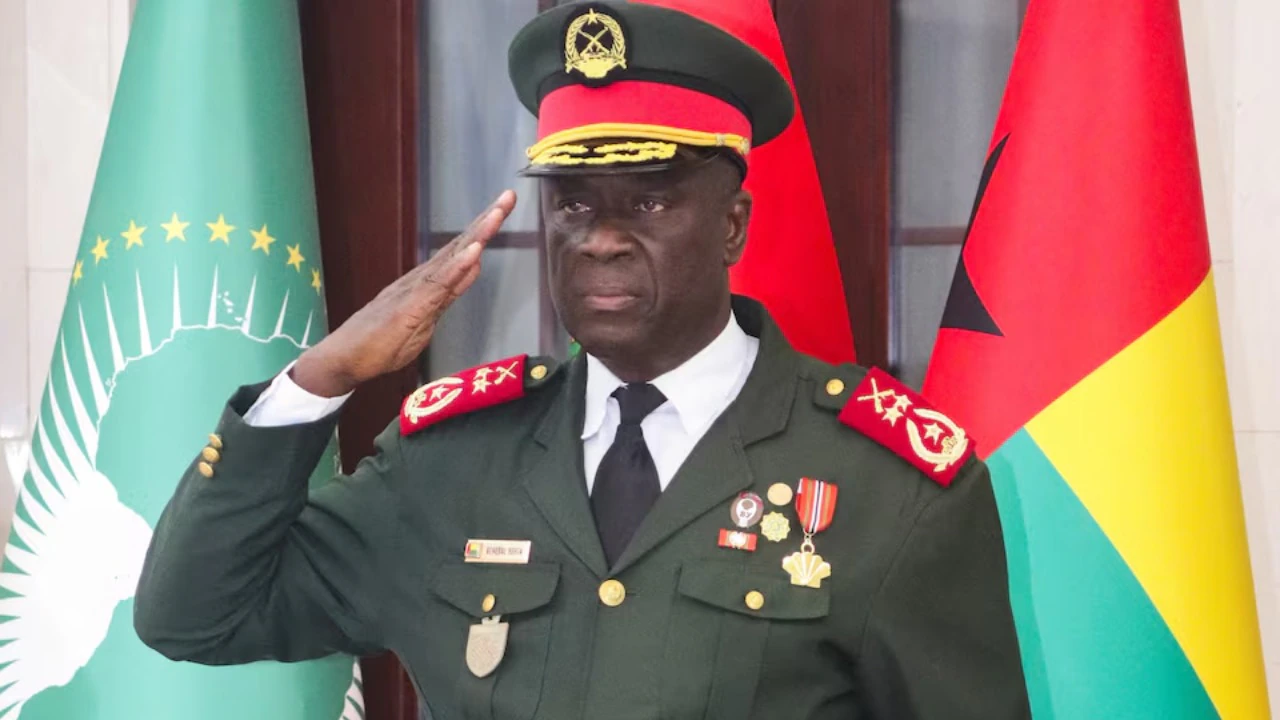
Guinea-Bissau has entered a new period of political uncertainty after soldiers announced they had taken control of the country, suspended the electoral process, and dissolved civilian authority.
The announcement followed hours of confusion and fear in the capital, Bissau, where heavy gunfire was heard during the afternoon. The sounds of shooting sent many residents fleeing their homes and abandoning vehicles as they searched for safety.
Government sources later confirmed that President Umaro Sissoco Embaló had been arrested shortly after the gunfire began at around 13:00 GMT.
In a short phone call with France 24, Embaló confirmed the situation himself, saying simply:
“I have been deposed.”
Military Appears on State Television
Soon after reports of the arrest emerged, senior military officers appeared on state television to formally announce the takeover.
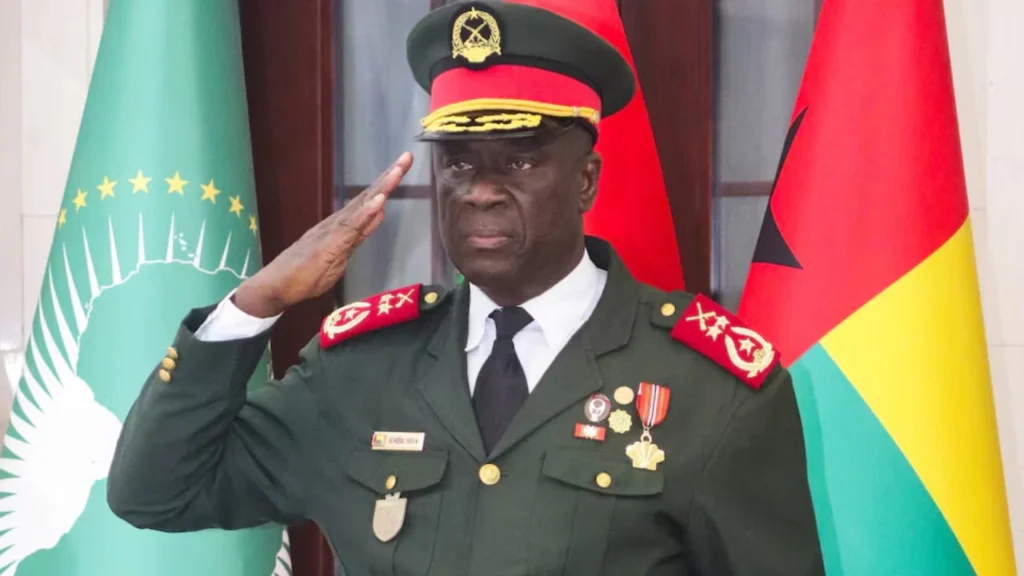
The statement was read by General Denis N’Canha, the head of the military household at the presidential palace. He said the army had formed a new ruling body called “The High Military Command for the Restoration of Order.”
The military leadership announced several immediate measures, including:
No clear timeline was given for a return to civilian rule.
Arrests and Unclear Situation on the Ground
Reports indicate that several senior government officials were arrested along with the president. These include members of Embaló’s military staff and cabinet ministers.At this stage, it remains unclear
By late afternoon, the gunfire had stopped, and calm had returned to parts of Bissau. However, uncertainty continued to hang over the city.
Takeover Comes Amid Election Dispute
The military action comes at a highly sensitive political moment. Guinea-Bissau was waiting for the official results of Sunday’s presidential election, which had already been controversial.
The election faced criticism after the main opposition candidate was barred from running. Even before official results were due on Thursday, both President Embaló and his main challenger, Fernando Dias, claimed victory.
This dispute added to tensions and raised fears of unrest even before the military stepped in.
A History of Political Instability
Guinea-Bissau has a long history of political instability and military interference.
Since gaining independence from Portugal in 1974, the country has experienced nine coups or attempted coups. Democratic transitions have often been fragile, short-lived, or interrupted by violence.
The country, home to fewer than two million people, has also faced serious governance challenges. The United Nations has previously described Guinea-Bissau as a “narco-state,” citing its role as a major transit point for cocaine smuggled from Latin America to Europe.
Weak institutions and repeated power struggles have left the military as a powerful political actor.
Embaló’s Contested Leadership
President Embaló has often claimed to have survived multiple coup attempts during his time in office. He frequently accused political rivals of stirring unrest to destabilize his government.
Opposition figures, however, argue that Embaló exaggerated threats in order to tighten his grip on power and justify strong-handed measures.
This long-running political tension has divided the country and weakened trust in democratic institutions.
Uncertain Road Ahead
If the military takeover holds, it will mark another turning point in Guinea-Bissau’s troubled political history.
Observers warn that the situation could further isolate the country, disrupt governance, and raise concerns among regional and international partners.
For now, Guinea-Bissau remains in a state of uncertainty, with citizens waiting for clarity on who truly holds power and what comes next for the country’s fragile democracy.