
On January 5, residents in Mulbarton, south of Johannesburg, saw five young men standing in the street wearing only underwear. Because the scene looked alarming, many people stopped to watch.
Soon after, police arrived and found seven more young men nearby. Officers later linked two of them to a car involved in a high-speed chase. As a result, police arrested a 47-year-old Ethiopian man and charged him with kidnapping and ignoring police orders.
The authorities also charged the twelve young men, aged between 22 and 33, for being in South Africa illegally.
Police believe smugglers had locked them inside a house before they escaped.
Smugglers Hold Migrants for Money
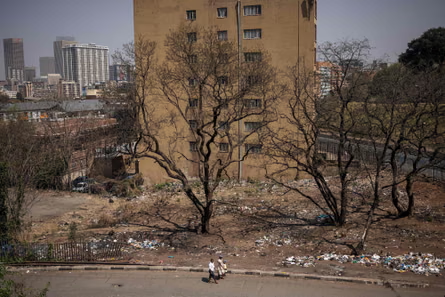
In recent years, similar cases have increased in Johannesburg. Many Ethiopian migrants escape from suburban houses where smugglers keep them in poor conditions.
Smugglers demand money from relatives before releasing the migrants. Therefore, families often sell land or borrow money to save their loved ones.
According to the United Nations, about 200,000 Ethiopians lived in South Africa in 2024. Meanwhile, experts estimate that tens of thousands more arrive every year.
Why Ethiopians Leave Home
Ethiopians began migrating to South Africa after 1994, when Nelson Mandela opened the country to other African nations. However, political and economic problems later increased migration.
For example, Aseged Yohannes left Addis Ababa in 2012 after police arrested him for supporting an opposition party online. Because he feared for his safety, he decided to leave the country.
A Journey Full of Danger
Yohannes travelled by bus to the Kenyan border and crossed on foot at night. Then, smugglers drove him across Kenya, Tanzania, Malawi, and Mozambique. The journey took two months.
Today, he manages a small alcohol shop in a Johannesburg township. However, he says luck helped him survive.
In contrast, many others die. In 2020, officials found 64 migrants dead inside a truck in Mozambique. Moreover, rival gangs now fight for control of smuggling routes, which increases violence.
Poverty Now Drives Migration
Experts say migration today comes mostly from economic hardship. Young Ethiopians leave because they see no jobs or future at home.
In addition, social media shows success stories from South Africa. As a result, many young people feel left behind.
Most migrants now come from areas near Hosanna in southern Ethiopia.
Pain Along the Way
Sahlu Abebe travelled in 2015. During the journey, his friend became seriously ill in Tanzania. Because he could not continue, others left him behind.
Later, Abebe heard that more than 40 migrants had died in that area. Therefore, he lost hope of seeing his friend again.
In Malawi, police arrested Abebe. He spent six months in a crowded prison cell with nearly 90 people. He describes the journey as the worst experience of his life.
Life in South Africa Is Still Hard
Even after arriving, migrants face new problems. For example, criminals often rob them. In addition, xenophobic attacks remain common.
Abebe now works in a small township shop. However, he warns others not to follow his path.
“It is not safe,” he says. “I cannot tell others to come here.”
A Crisis That Continues
Despite the danger, many young Ethiopians continue to leave. Poverty, unemployment, and pressure push them onto risky routes.
Therefore, experts warn that migration will not stop unless safer systems and better opportunities exist at home.