
Fighting has intensified in remote areas of eastern Democratic Republic of Congo, creating new challenges for international mediation efforts led by the United States. The violence is unfolding far from major cities, but its impact is being felt by civilians, hospitals, and humanitarian agencies.
As clashes spread through mountainous regions of South Kivu province, analysts warn that the conflict could undermine fragile diplomatic initiatives and worsen an already severe humanitarian crisis.
Wounded arrive as fighting spreads
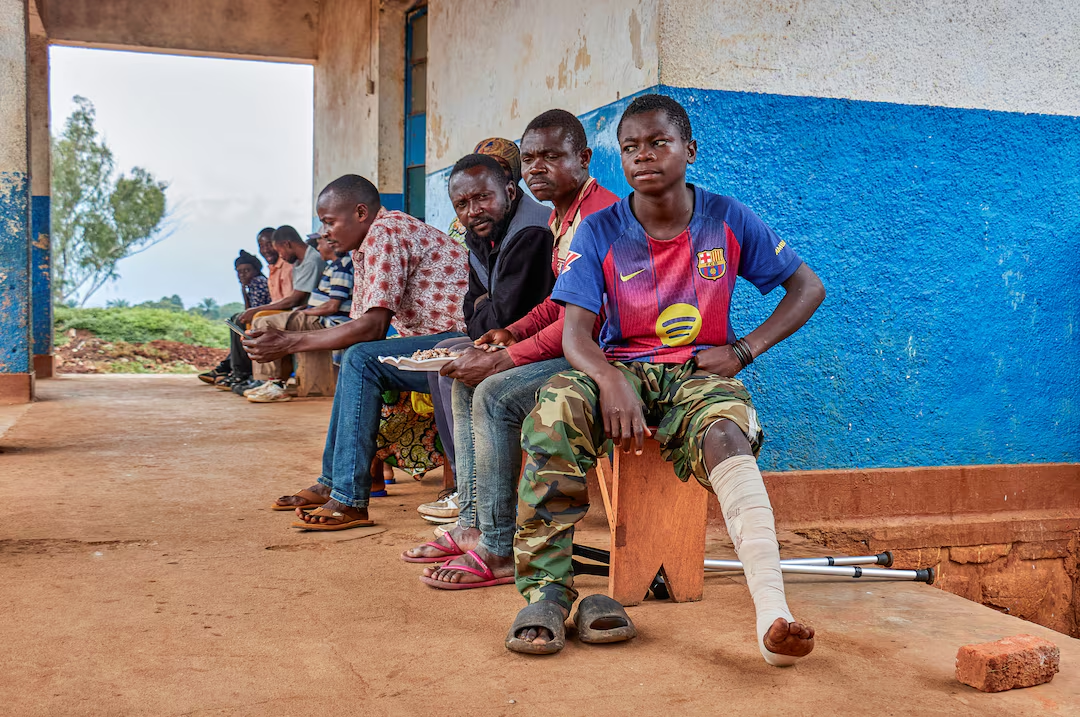
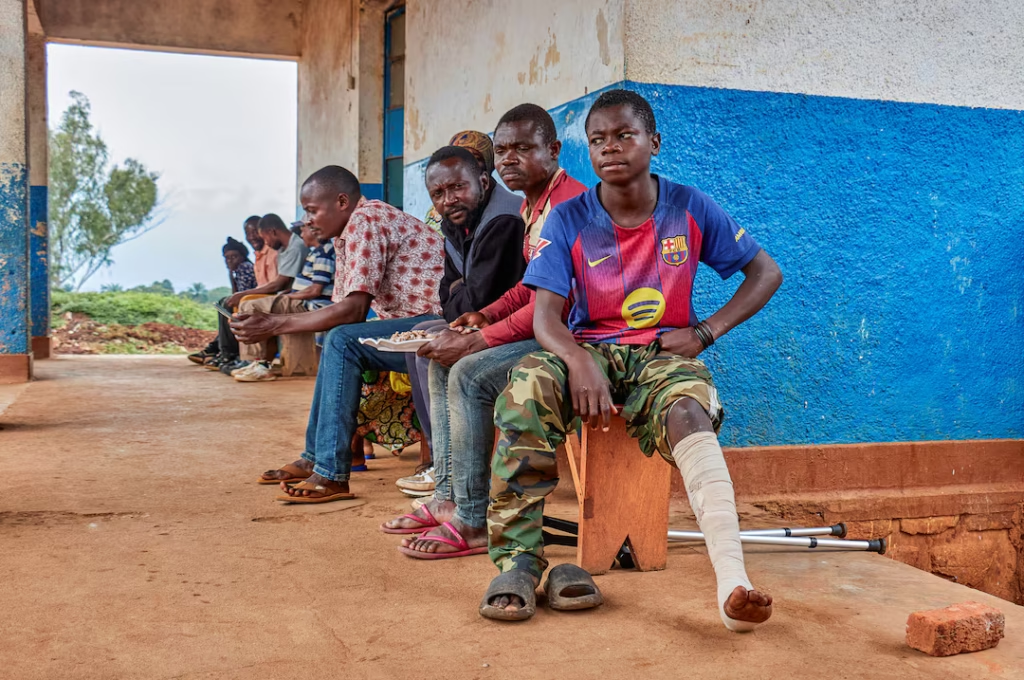
At the general hospital in Fizi, nurses rushed a wounded soldier into surgery after he arrived on the back of a motorbike. He had been shot in both legs during fighting in the mountains north of the town.
Medical staff say such scenes have become increasingly common. The fighting between government forces and armed groups has surged in recent weeks, pushing casualties toward overstretched health facilities.
Remote battles draw less attention
The clashes are taking place in hard-to-reach highlands, far from urban centres. Because of the isolation, the fighting has received limited international attention compared to battles in major cities.
However, observers say the remoteness makes the situation more dangerous. Armed groups can operate with less scrutiny, while civilians struggle to access help.
Hospital overwhelmed by casualties
The hospital in Fizi, supported by the International Committee of the Red Cross, is under severe strain. When journalists visited in late January, the facility was treating 115 wounded patients.
This is more than four times its normal capacity of 25 beds. Doctors and nurses say they are running out of space, supplies, and energy.
Doctors warn of growing risks
Most patients arrive with gunshot wounds to their arms or legs. Many injuries are already infected by the time they reach hospital.
“Limited facilities on the frontline mean patients often arrive late,” said surgeon Richard Lwandja. He warned that delays increase the risk of complications and amputations.
Rebels expand operations south
The escalation follows renewed activity by the AFC/M23 rebel coalition. Earlier this week, the group cited the fighting as justification for a drone attack on Kisangani airport, hundreds of kilometres from the front lines.
The rebels said the strike was retaliation for government air attacks on villages in South Kivu. Congo’s army has not publicly commented on the claims.
A history of rapid advances
AFC/M23 staged a rapid offensive early last year. In February 2025, the group captured Bukavu, the capital of South Kivu province.
In December, the rebels pushed further south and briefly seized Uvira, a key town near the Burundi border, before withdrawing days later under US pressure.
US-brokered deal under strain
The withdrawal from Uvira followed a peace agreement brokered by Donald Trump between Congo and Rwanda in June.
Despite the deal, violence has resumed in remote areas. Analysts say this shows how fragile the agreement remains and how quickly conditions can change on the ground.
Rwanda denies backing rebels
The United Nations and several Western governments accuse Rwanda of backing AFC/M23 and exercising influence over its operations.
Rwanda has repeatedly denied direct military involvement. However, the allegations continue to shape regional tensions and diplomatic discussions.
Focus on Minembwe highlands
Recent fighting has centred on the highlands around Minembwe in Fizi territory. The Congolese army has launched operations against AFC/M23 and its local ally, Twirwaneho.
Twirwaneho is linked to the Banyamulenge, a Congolese Tutsi community with long-standing grievances over land and representation.
Strategic importance of the region
Analysts say the highlands are highly strategic. Control of the area provides access to major towns in the lowlands, including Uvira.
“Whoever controls these hills controls movement and supply routes,” said Regan Miviri of the Ebuteli research institute in Kinshasa.
Government seeks to contain spread
According to Miviri, the government’s priority is to secure Uvira and prevent the conflict from spreading toward Tanganyika and Katanga.
These regions host some of Congo’s most important mining centres. Any expansion of fighting there could threaten economic stability and foreign investment.
Diplomacy struggles to keep pace
The escalation comes even as diplomatic efforts continue. Congo and AFC/M23 agreed in Doha this week to activate a Qatari-mediated ceasefire monitoring mechanism.
A United Nations team is expected to deploy to Uvira in the coming days to help oversee the ceasefire.
Ceasefire hopes tempered by reality
Despite these efforts, fighting on the ground shows little sign of slowing. Local residents and medical workers say clashes continue almost daily.
Observers warn that ceasefire agreements often struggle to hold in remote areas where command structures are weak.
Competing narratives fuel conflict
AFC/M23 says its presence in the highlands is meant to protect the Banyamulenge community.
Kinshasa, however, accuses the rebels of exploiting long-running disputes over land, cattle, and local power to justify armed expansion.
Long-running local tensions
Eastern Congo has faced decades of conflict driven by ethnic tensions, competition for land, and control of mineral resources.
These underlying issues make peace efforts difficult, as armed groups often draw support from local grievances.
Humanitarian workers sound alarm
At Fizi hospital, staff fear they will soon be overwhelmed. Supplies arrive slowly due to poor roads and insecurity.
“Roads are often impassable and supplies run out,” said Red Cross nurse Robert Zoubda. “If this continues, we will need more tents.”
Civilians bear the burden
As fighting intensifies, civilians are caught in the middle. Many flee their homes, while others struggle to access healthcare, food, and clean water.
Aid agencies warn that displacement could rise sharply if clashes spread further south.
US mediation faces setbacks
The renewed violence complicates US efforts to stabilise eastern Congo. Washington has linked peace in the region to broader goals, including security and Western access to minerals.
Analysts say sustained fighting undermines investor confidence and weakens diplomatic leverage.
Remote wars, global consequences
Although the battles are far from capitals and headlines, their impact is significant. Instability in eastern Congo affects regional security and global supply chains.
Experts warn that ignoring remote conflicts allows them to grow until they become harder to contain.
Uncertain path forward
For now, the situation remains volatile. Diplomatic mechanisms are in place, but their success depends on enforcement and political will.
On the ground, doctors, nurses, and civilians continue to face the daily reality of war.
Conclusion: peace under pressure
The intensifying clashes in eastern Congo highlight the gap between diplomacy and reality on the battlefield. While ceasefire talks continue, violence in remote areas is pulling more forces into the conflict.
As humanitarian needs grow and mediation efforts are tested, the coming weeks will be critical in determining whether peace efforts can hold or whether the conflict will deepen further.