
The Africa Centres for Disease Control and Prevention (Africa CDC) has raised alarm over a sharp rise in cholera cases across Africa, warning that the disease is spreading faster and becoming more deadly in many countries.
According to the continental health agency, reported cholera infections have more than doubled, reaching over 310,000 cases in 2025. The outbreak has also caused nearly 3,000 additional deaths, affecting 25 African countries so far this year.
Health officials say the figures highlight a growing public health crisis that requires urgent and coordinated action.
Five Countries Account for Most Cases
Africa CDC said that five countries account for nearly 88% of all reported cholera cases on the continent. These are South Sudan, the Democratic Republic of the Congo (DRC), Angola, Nigeria, and Sudan.
The agency also reported that Sudan, the DRC, South Sudan, and Angola together make up more than 85% of all cholera-related deaths recorded in 2025.
These figures show that the outbreak is concentrated in countries already facing conflict, displacement, flooding, or weak water and sanitation systems.
Cholera Seen as More Than a Health Issue
Africa CDC stressed that cholera should not be viewed only as a medical problem. Instead, it described the disease as a leadership, infrastructure, and water-sanitation challenge.
To address the crisis, the agency has launched a unified task force and introduced a new strategy that looks beyond hospitals and clinics. The approach focuses on improving access to clean water, strengthening sanitation systems, and improving coordination between sectors.
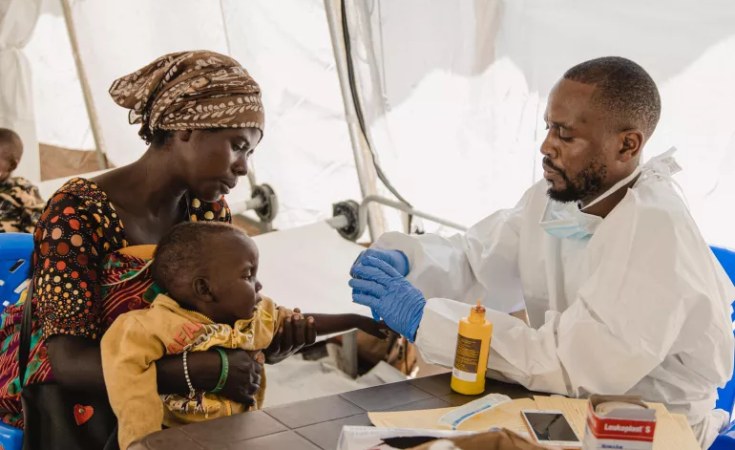
An image showing public health response efforts during a cholera outbreak in Africa, as the Africa CDC reports a sharp rise in cases and deaths across the continent.Africa CDC warned that without long-term investments in water and sanitation, cholera outbreaks will continue to recur.
What Is Cholera?
Cholera is a highly infectious diarrhoeal disease that can become fatal within hours if left untreated. It spreads through food or water contaminated with the bacterium Vibrio cholerae.
Symptoms usually appear between 12 hours and five days after exposure. They may include severe watery diarrhoea, vomiting, dehydration, muscle cramps, a rapid heart rate, and low blood pressure.
While some infected people show mild or no symptoms, untreated cases can quickly become life-threatening.
A Global Public Health Threat
Globally, cholera remains a serious public health concern. Health authorities estimate the disease causes between 1.3 million and 4 million cases each year, leading to 21,000 to 143,000 deaths worldwide.
Africa continues to carry a heavy burden due to limited access to safe drinking water, poor sanitation, climate-related disasters, and population displacement.
Call for Stronger Action
Africa CDC has urged governments to strengthen disease surveillance, expand access to clean water, improve sanitation, and scale up rapid response systems.
The agency warned that without coordinated action, cholera will continue to threaten lives, public health systems, and development across the continent.
Health officials stressed that cholera is preventable, but prevention requires sustained leadership, investment, and long-term solutions.