
Former Deputy President Rigathi Gachagua has rejected a public debate invitation from Health Cabinet Secretary Aden Duale, dismissing the challenge as “laughable” and saying he will only debate President William Ruto in the run-up to the 2027 General Election. The sharp exchange has added fresh fuel to Kenya’s growing political tensions as leaders begin positioning themselves ahead of the next presidential contest.
Gachagua made his position clear in a statement shared on his social media platforms on Thursday, February 12, 2026. He said he would not engage in debates with Cabinet secretaries or other government officials, whom he described as employees of the President. According to Gachagua, his political contest is directly with Ruto, not with members of his administration.
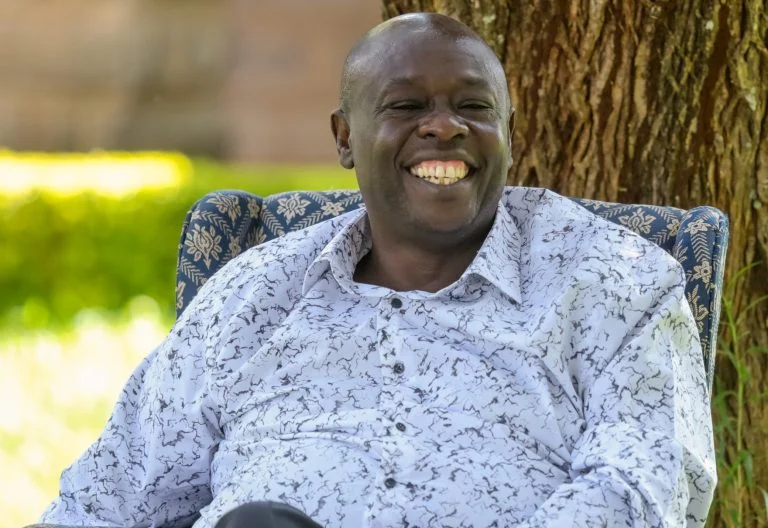
Gachagua’s Response to the Debate Challenge
In his statement, Gachagua mocked the idea of debating Duale and insisted that his focus remains firmly on the presidency. He said he would only participate in one debate, and that would be a presidential debate between himself and President Ruto.
“I have heard an employee of William Ruto inviting me to some debate. That is laughable,” Gachagua said. “I do not debate or engage with employees of William Ruto. I am only available for one debate with the Ruto team, the presidential debate next year between Mr William Ruto and me.”
He added that Cabinet secretaries should focus on their jobs and help the President prepare for the election instead of seeking personal political battles. His remarks were widely shared online and sparked strong reactions from both supporters and critics.
Duale’s Challenge in Garissa
Health Cabinet Secretary Aden Duale issued the debate challenge a day earlier while speaking at a youth empowerment event at Garissa High School on February 11, 2026. The event was presided over by President Ruto and included the disbursement of funds under the NYOTA youth programme.
Duale accused Gachagua of spreading misleading information about development in North Eastern Kenya. He said a public debate would allow leaders to discuss facts, projects, and government plans openly. Duale suggested that the debate take place on a popular television programme to give Kenyans a chance to judge for themselves.
“I am challenging Gachagua to a debate on development in the North Eastern region,” Duale said. “President Ruto, leave him to me. I will deal with him. Let us meet in public and talk about development. I am ready.”
Duale framed the challenge as an opportunity to defend the government’s record and explain ongoing projects in the region.
Dispute Over Development in Northern Kenya
The exchange comes against the backdrop of a long-running disagreement over development in Northern and North Eastern Kenya. Gachagua has repeatedly criticised the government and regional leaders, accusing them of failing to deliver services despite receiving large allocations since the introduction of devolution in 2013.
He has pointed to shortages of hospitals, classrooms, teachers, doctors, and clean water. According to Gachagua, these gaps show that development has not matched the level of funding provided to arid and semi-arid counties.
Gachagua has also accused President Ruto of making repeated promises during visits to the region without delivering tangible results. He argues that communities in Northern Kenya remain among the most neglected in the country.
Claims on Budget Allocations and Drought Response
One of Gachagua’s key arguments has focused on government spending during the ongoing drought. He has claimed that the government allocated about Ksh4 billion to 23 arid counties, which he says is too little to address the scale of the crisis.
According to Gachagua, the amount translates to roughly Ksh173 million per county and about Ksh1,200 per person for 3.3 million people in need. He has compared this figure to a United Nations estimate of around Ksh2,700 per person for a minimum food basket in rural areas.
He has also criticised spending on private jets, chartered aircraft, and helicopters, arguing that such expenses send the wrong message at a time when many Kenyans face hunger, water shortages, and loss of livelihoods.
Criticism of Social Services
Gachagua has raised concerns about poor social services in counties such as Wajir, Mandera, Marsabit, Isiolo, and Garissa. He has cited high maternal death rates, low vaccination coverage, and weak health systems as evidence of long-standing neglect.
He has also spoken about education challenges, saying many schools lack classrooms, laboratories, and teachers. According to him, some children still study under trees, which he says is unacceptable more than a decade after devolution.
“Children are studying under trees. Hospitals lack doctors and equipment. Does this prick our humanity at all?” Gachagua asked during a recent address.
Ruto’s Response and Call for Focus
President Ruto appeared to distance himself from the escalating exchange between Gachagua and Duale. Speaking at the same Garissa event, he cautioned against prolonged political arguments and urged leaders to focus on development and service delivery.
Ruto advised Duale not to escalate the confrontation, using a proverb to suggest that public arguments often distract from meaningful work. He said his administration has a clear agenda and programmes aimed at transforming the country.
“We should not waste time on unnecessary arguments,” Ruto said. “We have an agenda for this nation and a programme to deliver for Kenyans.”
His remarks suggested an attempt to project calm leadership while keeping the focus on government priorities.
Politics and the Road to 2027
The public exchange highlights how political temperatures are already rising ahead of the 2027 elections. Gachagua has increasingly positioned himself as a central figure in the opposition, often directing his criticism directly at President Ruto rather than Cabinet officials.
By rejecting Duale’s debate challenge, Gachagua has reinforced his message that he sees the contest as a direct face-off with the President. His supporters view this as a sign of confidence, while critics argue it avoids scrutiny of his claims.
For Duale and other government leaders, defending the administration’s development record remains a key task as criticism grows. The debate over Northern Kenya’s development is likely to continue, especially as drought, poverty, and inequality remain major national issues.
As Kenya moves closer to 2027, exchanges like this one signal that political rivalry is entering a more direct and confrontational phase. Whether through debates, rallies, or policy discussions, Kenyans can expect sharper contrasts and louder voices in the months ahead.