
In a quiet room inside a refugee camp in Ivory Coast, 57-year-old Yameogo Aminata struggles with painful memories that changed her life forever. Armed jihadists killed her four sons in her home country of Burkina Faso, leaving her injured and homeless. Despite her deep grief, she tried to fight back during the attack, showing courage in the face of extreme violence. Today, she lives as a refugee, carrying both physical scars and emotional pain.
The attack happened in 2022 while Aminata was away from her village in central Burkina Faso. Armed groups that have caused fear in the region for nearly 15 years stormed the area. They took control of land and cattle and killed many residents. Among those killed were Aminata’s four sons, aged between 25 and 32, in a brutal act that shattered her family.
When she returned home and saw the violence, Aminata said she could not stand by. She described how the attackers slit the throats of her sons. In shock and anger, she grabbed a knife and tried to defend her remaining child. However, she was quickly overpowered, beaten badly, and thrown into the bush. She suffered serious injuries to her head, shoulder, and throat.
The Growing Violence in Burkina Faso
The crisis in Burkina Faso is part of a wider conflict affecting the Sahel region of West Africa. At least 10,000 people have been killed in the insurgency, which has also spread to neighboring Mali and Niger. The United Nations has described the region as the “epicentre” of global jihadist violence. Millions of people have been forced to leave their homes due to ongoing attacks and insecurity.
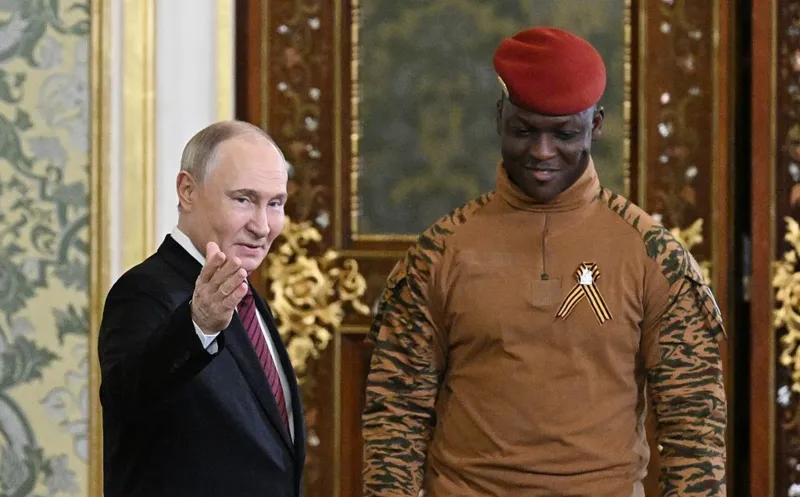
Several armed groups operate in the area, including an al-Qaeda-linked group called Jama’at Nusrat al-Islam wal-Muslimin (JNIM). These groups attack villages, security forces, and civilians. Military governments have taken power in Burkina Faso, Mali, and Niger, promising to restore security. They have reduced ties with Western countries and increased cooperation with Russia for military support.
Although Russian forces, operating under the Africa Corps banner, have been deployed to assist Burkina Faso’s military, violence continues. Many rural communities remain unsafe, and attacks happen regularly. Families like Aminata’s often have little warning before armed men arrive. The fear of sudden violence has become part of daily life in many villages.
Life in Nioronigué Refugee Camp
In 2023, Aminata fled to the Nioronigué camp in northern Ivory Coast. She carried with her the blood-stained clothes from the day of the attack as a reminder of what she endured. The camp was set up in 2023 by the United Nations and the Ivorian government to shelter people escaping violence in Burkina Faso. It was built to host around 6,000 people but now holds nearly 13,000 refugees, far beyond its planned capacity.
The 12-hectare camp is located near the Burkina Faso border, offering safety but limited comfort. Over 80,000 refugees from Burkina Faso now live in Ivory Coast, many of them in camps like Nioronigué and Timala. According to UN data, more than three million people have been displaced across the Sahel region due to conflict. The sudden rise in refugee numbers has stretched resources thin.
Aminata says she feels grateful to Ivory Coast for providing shelter. She thanks the government and local people for their support. However, she struggles daily with grief and uncertainty. Her daughter went missing during the attack and has not been found. She says she does not know how to rebuild her life after losing nearly everything.
Other Families Share Similar Pain
Aminata’s story is not unique in the camp. Sixty-year-old farmer Hassane Tall also fled northern Burkina Faso in 2023 with his three wives and 19 children. He said they escaped after repeated clashes between jihadist groups and security forces. Living under constant fear, he decided to leave his ancestral land behind. Though he misses his home deeply, he believes there is no safe future there for his family.
Refugees from Mali have also arrived in the camp. One 27-year-old finance graduate described how he and his brothers traveled by wooden boat along the Niger River from Gao to Bamako before taking a bus to northern Ivory Coast. They left after their 24-year-old cousin was killed by suspected jihadists while returning from fishing at night. The graduate said attacks like this happen often, and fear became part of everyday life.
Many refugees speak about living without knowing whether they would survive the next day. The journey to safety is often dangerous, involving long travel by river and road. Once they arrive, they must adjust to camp life, where food, water, and medical services are limited. Despite these hardships, they say safety is more important than comfort.
Pressure on Host Communities
Ivory Coast has one of the fastest-growing economies in the region, but unemployment and poverty remain serious challenges. Some local residents near the border worry about the growing number of refugees. However, government representative Djamatigui Touré has said refugees will not be turned away. He explained that people from Burkina Faso and Mali share history and culture with Ivorians, calling them brothers and sisters.
The United Nations Development Programme’s resident representative, Blerta Cela, has warned that the increase in refugees is putting heavy pressure on resources. Many refugees are not living in camps but are staying with local families, adding strain to already limited supplies. Aid agencies continue to call for more international support to prevent further hardship.
Hope for Peace in the Sahel
For Aminata, the hardest challenge is living with painful memories. She says she cannot erase the images of that tragic day. Though she is safe for now, she longs for peace to return to Burkina Faso so displaced families can go home. Her story reflects the wider crisis affecting thousands of families across the Sahel.
The conflict in Burkina Faso and neighboring countries remains complex and difficult to resolve. While governments and international partners seek military and political solutions, ordinary people continue to suffer. Refugees like Aminata pray for stability, security, and a chance to rebuild their lives. Until peace returns, camps like Nioronigué will remain shelters for those forced to flee violence in search of safety.