
Uganda’s army chief, General Muhoozi Kainerugaba, has once again drawn international attention after a series of controversial social media posts. Critics say his remarks, which included threats against opposition figures and religious claims, highlight growing political tension in the country. The comments came after Uganda’s fiercely contested presidential election.
Kainerugaba is the son of President Yoweri Museveni, who recently secured a seventh term in office. Analysts believe this may be Museveni’s final term, raising questions about succession. Many now see Kainerugaba as being positioned to inherit power.
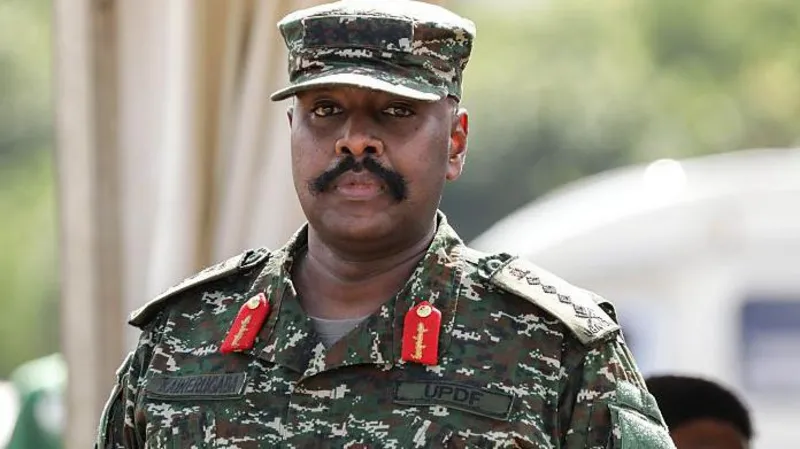
Army Chief Accused of Using Threatening Language
During the post-election period, Kainerugaba used social media platform X to comment on opposition protests. In several posts, later deleted, he referred to the killing of opposition supporters. He also threatened opposition leader Bobi Wine with arrest and violence.
One post warned Wine to surrender himself to police within 48 hours. Another threatened to castrate him. Although the posts were later removed, screenshots circulated widely. The remarks sparked condemnation from human rights groups and political observers.
Claims of an “Unholy Alliance” at the Top
Critics describe Uganda’s leadership as an “unholy trinity.” This phrase refers to President Museveni, his son Muhoozi Kainerugaba, and Museveni’s brother, Salim Saleh. Saleh is a powerful figure and serves as a senior adviser with strong influence behind the scenes.
Kenya-based analyst Nicodemus Minde said he heard the term during research trips to Uganda. He described Museveni as “the Father,” Muhoozi as “the Son,” and Saleh as “the Spirit.” According to Minde, Saleh controls money, business networks, and access to power.
Religious Language Fuels Political Debate
The idea of divine authority has featured repeatedly in Ugandan politics. Last year, then-parliamentary speaker Anita Among compared Museveni and his family to the Holy Trinity while rallying supporters. Her comments drew criticism but reflected how religion is sometimes noted in political messaging.
Kainerugaba himself has also invoked religion. In one deleted post, he claimed his bloodline descended from Jesus Christ. Critics say such language feeds a belief that the ruling family sees power as divinely granted.
Opposition Rejects Election Results
Opposition leader Bobi Wine rejected the election outcome after receiving 24 percent of the vote. He described the results as fake and accused authorities of ballot stuffing. His claims angered the army chief.
Following the election, security forces disrupted opposition rallies. According to Kainerugaba’s own posts, at least 30 people were killed and more than 2,000 detained. The United Nations later said the election took place in an environment of repression and intimidation.
Deleted Tweets but Lingering Impact
Although many of Kainerugaba’s posts were deleted, some remain visible. One tweet stating that Bobi Wine was wanted “dead or alive” is still online. This is despite a government minister later saying the opposition leader was free to carry out his activities.
Wine later shared screenshots of deleted posts. Kainerugaba responded mockingly, dismissing him with sarcasm. The exchanges further inflamed public debate.
Tensions With the United States and Kenya
Kainerugaba also accused the United States of helping Bobi Wine escape. He claimed this would lead to a suspension of military cooperation. Days later, he apologised, saying he had received incorrect information.
In 2022, he threatened to invade neighbouring Kenya. The comment triggered public backlash and forced President Museveni to personally apologise to Kenya’s president. These incidents raised concerns about how social media statements could affect diplomacy.
The “Tweeting General” Reputation
Kainerugaba is widely known as the “tweeting general.” He has a long history of controversial online remarks, many of which are later withdrawn. At times, he has promised to leave social media, only to return days later.
Supporters describe his style as expressive. A close friend compared him to former U.S. President Donald Trump, saying his posts reflect personal expression rather than policy. Critics, however, say the remarks are dangerous given his powerful position.
Analysts Link Posts to Succession Politics
Political analysts believe Kainerugaba’s behaviour is linked to succession politics. With Museveni’s long rule nearing its end, attention has shifted to who might take over. Analysts say the general may be trying to show loyalty and strength to appeal to his father and supporters.
However, Nicodemus Minde argues that the strategy does little to win public favour. Instead, it raises fear and resistance among citizens already worried about democratic space.
Military Power and Human Rights Concerns
Kainerugaba heads Uganda’s military and played a key role in forming the Special Forces Command. The unit is responsible for presidential security. It has also been accused of abducting and torturing opposition supporters.
While the unit denies wrongdoing, some officers have been convicted of abuse. One soldier was sentenced to death in 2024 for killing civilians, including a child. These cases have deepened public concern.
Social Media Revelations Shock the Public
In one incident, Kainerugaba admitted on social media that Bobi Wine’s bodyguard was detained “in my basement.” He later posted an image of the man in distress, sparking outrage. He also threatened him with castration.
Wine has accused the military of raiding his home and targeting his family. His wife later claimed she was assaulted during a search operation, an allegation Kainerugaba denied.
Family Dynasty Expands Into the Military
Uganda’s political dynasty appears to be growing. Kainerugaba’s son, Ruhamya, has joined the army. Observers say this mirrors earlier patterns, where military service acts as a pathway to power.
Some analysts suggest the leadership “trinity” could evolve. In the future, Muhoozi may become the central figure, with his son positioned for influence.
Background of the Army Chief
Kainerugaba was born in 1974 and spent his early years in exile. He lived in Tanzania, Kenya, and Sweden before returning to Uganda in 1986 when his father took power. He joined the army in 1999 and trained at the UK’s Sandhurst military academy.
His rise through the ranks was rapid. He became a lieutenant-general within a decade and was promoted to full general in 2022. Supporters say his experience makes him a strong security leader.
Public Reaction and Growing Concerns
Despite praise from allies, critics say Kainerugaba has little tolerance for opposition. His posts and actions have increased fear among activists and opposition supporters. Many worry that dissent is being criminalised.
International observers warn that unchecked military influence in politics could damage Uganda’s democratic institutions. Social media statements by senior officials, they say, should not replace lawful process.
Conclusion
General Muhoozi Kainerugaba’s controversial remarks have intensified debate over Uganda’s future. His threats, religious claims, and political positioning raise serious questions about power, accountability, and succession.
As Uganda looks ahead, the balance between security and democracy remains fragile. Observers say the actions of those in power will shape whether the country moves toward stability or deeper repression.