
The University of Djibouti has officially opened a new research centre aimed at strengthening renewable energy development and modernising the country’s electricity systems. The facility, known as the Laboratory of Research in Energy and Energy Systems (LaRESE), was established with funding from the World Bank under the African Centres of Excellence Impact (ACE-Impact) project. This initiative supports applied research, innovation, and higher education across sub-Saharan Africa.
The launch of LaRESE marks an important step in Djibouti’s effort to build local scientific capacity and reduce dependence on imported energy. Equipped with modern scientific instruments, the laboratory will focus on renewable energy solutions, electricity grid improvement, and sustainable resource management. University officials say the centre will allow researchers and students to design practical solutions that respond directly to national and regional energy challenges.
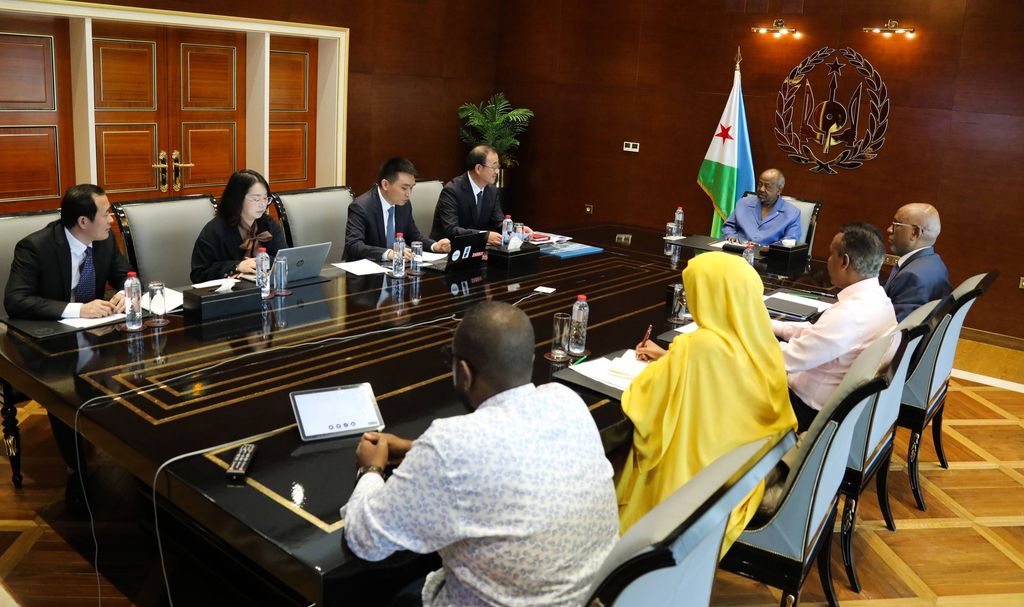
Souleiman Omar Hoch, coordinator of the ACE-Impact project, said the new facility will help transform research into real development results. He explained that the laboratory will not only support academic work but also provide technical answers for government and private sector energy projects.
Renewable Energy at the Heart of Djibouti’s Future
Djibouti has experienced rising electricity demand due to population growth, urban expansion, and economic activity. For many years, the country relied mainly on electricity imports from Ethiopia. While these imports helped meet short-term needs, they also created vulnerability whenever supply conditions changed.
To solve this challenge, the government has turned its attention to renewable energy. Djibouti has strong potential in geothermal, wind, and solar power. These resources can provide clean, affordable, and reliable energy if properly developed.
LaRESE will play a key role in supporting this transition. Researchers will test new technologies, study efficiency, and develop energy models suited to Djibouti’s climate and terrain. The centre will also help improve electricity grid stability, which is essential for avoiding power losses and outages.
By focusing on clean energy, Djibouti hopes to lower electricity costs, protect the environment, and improve energy security. Experts believe that renewable energy can also attract foreign investment and support job creation in engineering, construction, and technology sectors.
Regional Research and Cooperation
The centre is led by Chaker Ibrahim Omar, who described LaRESE as a regional platform for scientific cooperation. According to him, the laboratory will open its doors to researchers from East Africa and the Horn of Africa. Universities, research institutes, and students will collaborate on joint projects, training programmes, and innovation initiatives.
This regional approach is important because energy challenges are shared across borders. Climate change, energy shortages, and rising demand affect many African countries. By working together, researchers can exchange ideas, reduce duplication, and develop stronger solutions.
LaRESE will also host conferences, workshops, and technical training sessions. These activities will help young scientists gain skills while strengthening networks between universities and industry players.
Support from Government and the World Bank
The inauguration ceremony was attended by senior government officials, including the Minister of Higher Education and Research, Nabil Mohamed Ahmed, and University President Djama Mohamed Hassan. Both leaders praised the project as a major achievement for education and innovation in Djibouti.
The minister said the centre will help prepare young people for future careers in science and technology. He added that strong research institutions are essential for national development.
University President Djama Mohamed Hassan noted that LaRESE improves the university’s ability to attract partnerships, funding, and skilled researchers. He said the centre strengthens Djibouti’s position as a serious contributor to African scientific progress.
The World Bank’s ACE-Impact project has supported similar centres across Africa. Its goal is to reduce the loss of African talent by providing modern facilities locally. Many African scientists leave the continent because they lack access to advanced equipment and research funding. By investing in centres like LaRESE, the project helps keep talent at home and encourages innovation within Africa.
Economic and Social Benefits
Renewable energy research does not only benefit scientists. It also supports economic growth and social development. Clean energy projects can create employment, improve power access in rural areas, and support industries such as manufacturing, tourism, and digital services.
With reliable electricity, businesses can operate more efficiently. Schools and hospitals can also function better. In addition, renewable energy reduces pollution and supports climate goals.
Officials believe that LaRESE will help connect research with industry needs. Engineers, policymakers, and investors will use data from the centre to plan energy projects more accurately. This link between research and practice increases the chances of long-term success.
Reducing Brain Drain and Building Talent
One of the biggest challenges in African research is brain drain. Many skilled scientists leave for better opportunities abroad. The new centre aims to change this by offering world-class facilities locally.
Students at the University of Djibouti will now access modern equipment, international research networks, and advanced training. This environment encourages young people to remain in the country and contribute to national development.
In addition, the centre will support postgraduate studies and doctoral research. This will increase the number of highly trained experts in Djibouti’s energy sector.
A Regional Energy Hub in the Making
With LaRESE now operational, Djibouti is positioning itself as a renewable energy research hub in the Horn of Africa. The country’s strategic location, political stability, and commitment to clean energy make it attractive for regional cooperation.
Experts believe that Djibouti can lead in geothermal research, given its volcanic geology. Solar and wind studies will also help neighbouring countries with similar climates.
The government hopes that in the future, research from LaRESE will guide regional energy policies and investment strategies.
Challenges Ahead
Despite the optimism, experts warn that long-term success will require sustained funding, skilled management, and strong partnerships. Research centres often struggle when support declines after the launch phase.
Therefore, officials stress the importance of linking LaRESE with industry, government planning, and international donors. Continuous training and equipment upgrades will also be necessary.
A Step Toward Sustainable Development
The opening of LaRESE represents more than just a new building. It reflects Djibouti’s commitment to education, innovation, and sustainable development.
By combining scientific research, regional cooperation, and government support, the University of Djibouti has taken a major step toward building a cleaner and more resilient energy future.
As climate change and energy demand continue to rise, centres like LaRESE will become increasingly important. They offer Africa the chance to design its own solutions instead of relying solely on external technologies.
Conclusion
Djibouti University’s new renewable energy research centre is a powerful symbol of progress. It strengthens education, supports innovation, and promotes clean energy. It also places Djibouti firmly on the path toward energy independence and regional leadership in science and technology.
With proper support and continued commitment, LaRESE can transform Djibouti into a key player in renewable energy research across the Horn of Africa, delivering long-term benefits for the country, the region, and future generations.