
After one thousand days of war, Sudan is facing one of the worst humanitarian disasters in the world. Nearly seventy percent of the population now depends on emergency aid to survive.
Fighting between the Rapid Support Forces and the Sudanese Armed Forces continues to destroy cities, displace families, and tear communities apart. As a result, no region remains untouched by violence.
One of the most painful moments came in late October when RSF fighters captured Al Fashir, the capital of North Darfur. This event changed the course of the war and pushed civilians into even greater danger.
Reality Behind the Videos
Soon after the takeover, videos appeared online showing people cheering in the streets. However, civilians who returned to Al Fashir told a very different story.
They said the videos were misleading.
Instead of celebration, they found empty homes, damaged buildings, and frightened neighbors. Many had returned only to collect belongings or search for missing family members.
In reality, the city felt broken and unsafe.
Civilians Held for Ransom
Meanwhile, RSF fighters detained hundreds of civilians, including doctors, journalists, and politicians.
One doctor, speaking under a false name for safety, described how fighters assaulted her and later detained her in a camp filled with wounded people, elderly civilians, and children. Afterward, she was forced to work in the last functioning hospital.
Inside the hospital, she treated patients without enough medicine, equipment, or protection. At the same time, armed guards controlled every movement.
Heavy Weapons and Constant Fear
Before the fall of Al Fashir, intense shelling injured many civilians.
The doctor explained that fighters used tanks, howitzers, missiles, and several types of drones. Some drones carried bombs. Others guided attacks or gathered information.
Because of these weapons, homes, schools, and hospitals suffered severe damage.
As a result, many families lost shelter and safety at the same time.
Foreign Weapons Fuel the War
Over the course of the conflict, Sudan has received a large flow of foreign weapons.
Videos shared online show RSF fighters using modern armored vehicles and heavy equipment in areas where serious abuses occurred.
One vehicle matched the design of the Panthera T2 armored vehicle, produced by a UAE-based company. Previously, the same vehicle appeared in Libya with forces backed by the UAE.
Because of this, experts began to question how such equipment reached Sudan.
Experts Warn of Embargo Violations
Security expert Emaddedin Badi said supply routes operate through Libya and Chad using proxy networks. According to him, these routes break both the Sudan and Libya arms embargoes.
He warned that repeated violations allow weapons to move freely across borders. Consequently, wars last longer and civilians suffer more.
UAE Response
The United Arab Emirates strongly denied supporting any side in the Sudan conflict.
In a statement, the UAE said it follows strict export control laws and international arms regulations. It also explained that weapons like the AH-4 Howitzer have existed on the global market for many years.
Therefore, the UAE rejected claims that it supplied weapons to Sudan’s fighters.
Civilians Continue to Suffer
While governments issue statements, Sudanese civilians continue to pay the price.
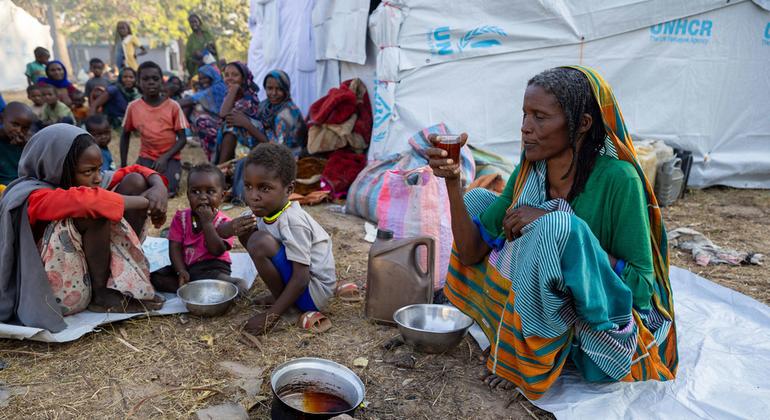
Families live in overcrowded camps without enough food, water, or medicine. Children miss school. Hospitals operate with limited supplies. Many people have lost homes, jobs, and relatives.
Because of this, human rights groups warn that Sudan risks becoming a forgotten crisis.
No Safe Place Left
In many cities, fighting continues daily.
Markets remain empty. Roads remain dangerous. People fear leaving shelters. Entire neighborhoods have disappeared.
Meanwhile, families remain separated, and many still search for missing loved ones.
Emotional Wounds Run Deep
Beyond physical harm, the war has caused deep emotional pain.
Survivors describe fear, trauma, and sleepless nights. Parents worry about their children’s future. Young people feel hopeless. Doctors report a sharp rise in mental health problems.
Therefore, Sudan’s suffering goes far beyond what cameras can capture.
International Concern Grows
Human rights groups continue to demand protection for civilians. They also call for investigations into war crimes and stronger action to stop weapons from entering Sudan.
However, many Sudanese believe the world has not acted fast enough.
A Country Exhausted
Sudan once stood as a nation rich in culture, history, and strength. Today, its people fight simply to survive.
After one thousand days of war, the nation feels tired, broken, and forgotten.
Yet many still ask one question.
How much longer must this continue?
Final Reflection
Sudan’s war is not only about territory or power.
It is about families searching for children.
It is about doctors working under fear.
It is about cities turned into ruins.
Until real peace arrives, Sudan’s pain will continue to echo across its streets and across the world.