
Huge crowds of protesters have taken to the streets of Tehran and many other Iranian cities, marking one of the largest anti-government movements the country has seen in years. Verified videos show thousands of people marching peacefully while demanding political and economic change.
The demonstrations took place on Thursday evening in Tehran and Mashhad, Iran’s second-largest city. Security forces did not immediately stop the protests, allowing crowds to move freely through major roads. Later in the night, however, a nationwide internet blackout was reported, raising serious concerns about censorship and the safety of civilians.
Voices Calling for Change
In videos verified by BBC Persian, protesters can be heard chanting against Iran’s Supreme Leader, Ayatollah Ali Khamenei. Many also called for the return of Reza Pahlavi, the exiled son of Iran’s last shah.
Chants such as “Death to the dictator,” “Long live the shah,” and “Don’t be afraid, we are all together” echoed across streets in Tehran, Mashhad, Isfahan, Tabriz, and other cities.
In Mashhad, several protesters were seen climbing onto an overpass and removing what appeared to be surveillance cameras. In eastern Tehran, thousands marched along a major highway, waving flags and shouting slogans.
Footage from northern Tehran showed crowds chanting, “This is the final battle, Pahlavi will return,” while others shouted, “Dishonourable,” after clashes with security forces.
Twelve Days of Unrest
According to human rights groups, the protests have now continued for twelve consecutive days. The unrest was triggered by the collapse of Iran’s currency, rising food prices, unemployment, and growing public frustration with government policies.
What started as economic anger has now turned into a wider political movement.
Demonstrations have spread to more than one hundred cities and towns across all thirty-one provinces of Iran. This wide reach shows that dissatisfaction is no longer limited to one region or group.
People from different backgrounds, including students, workers, shop owners, and families, have joined the protests.
Growing Death Toll
The Human Rights Activist News Agency reported that at least thirty-four protesters, including five children, have been killed. Eight members of the security forces have also died. More than two thousand two hundred protesters have been arrested.
Another organization, Iran Human Rights, reported an even higher death toll of at least forty-five protesters, including eight children.
BBC Persian has confirmed the identities of twenty-two people who were killed. Iranian authorities, however, have only confirmed the deaths of six security personnel.
Human rights groups say the true numbers may be much higher because many families are afraid to report deaths.
Violence in Western Regions
Western Iran has seen some of the worst violence during the unrest.
In the city of Dezful, footage showed security forces opening fire in a central square as crowds tried to flee.
In Ilam, Kermanshah, and Lorestan provinces, many shops were closed following calls for a general strike by exiled Kurdish opposition groups.
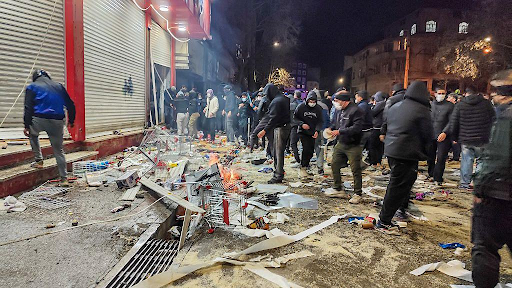
Videos showed empty streets, broken windows, and damaged buildings.
According to Kurdish human rights group Hengaw, at least seventeen protesters were killed in these three provinces alone. Many of them belonged to Kurdish and Lor minority communities.
In the town of Lomar, crowds were filmed chanting against the clerical establishment. Another video showed people throwing papers into the air outside a bank that appeared to have been damaged.
Deadliest Day So Far
Wednesday was described as the deadliest day since the protests began.
Iran Human Rights confirmed that thirteen protesters were killed in a single day across the country.
The organization warned that security forces are using increasing levels of violence to control the demonstrations.
Hengaw reported that two protesters were shot dead by security forces in Khoshk-e Bijar, in the northern province of Gilan.
Iranian state-linked media reported that three police officers were also killed in separate incidents. Two were shot in the town of Lordegan, and another was stabbed near Tehran.
Reza Pahlavi’s Message
Reza Pahlavi, who lives in the United States, urged Iranians to continue protesting peacefully and remain united.
In a post on X, he said millions of Iranians had demanded their freedom and praised them for their courage.
He thanked US President Donald Trump for holding Iran’s leadership accountable and called on European leaders to take stronger action.
Pahlavi asked people to continue protesting every night from eight pm local time.
Internet Blackout Raises Alarm
Internet monitoring group NetBlocks confirmed that Iran is experiencing a nationwide internet shutdown.
The group warned that cutting off communication limits people’s ability to share information, seek help, and report abuses.
Iran has used internet blackouts in past protests to reduce coordination among demonstrators and limit international attention.
Human rights groups say such shutdowns increase the risk of violence and human rights violations.
State Media Downplays Protests
Iranian state media has attempted to reduce the impact of the protests.
Some outlets denied that demonstrations were taking place and showed videos of empty streets.
However, independent footage continues to show large crowds in many cities, contradicting official reports.
This difference between state media and citizen videos has increased public mistrust.
Kurdish Communities Under Pressure
Kurdish areas have been especially affected by the unrest.
Many residents say security forces have used heavy force in these regions.
Human rights groups say Kurdish and Lor minorities have suffered a higher number of deaths and arrests.
Community leaders fear that ethnic tensions could rise if the violence continues.
Why People Are Protesting
While the protests began over economic problems, they have grown into something much larger.
Many Iranians say they are tired of corruption, unemployment, censorship, and lack of political freedom.
Young people, in particular, say they see no future without major change.
Families struggle with rising prices of food, fuel, and medicine.
Small business owners say they can no longer survive.
Students say they feel ignored and silenced.
Together, these frustrations have created a powerful national movement.
Fear and Courage in the Streets
Despite the danger, many protesters continue to return to the streets.
They say fear no longer controls them.
Videos show people helping injured protesters, sharing food and water, and protecting each other from harm.
Many chant slogans calling for unity, courage, and freedom.
Human rights activists say these moments show the strength of the Iranian people.
International Reaction
World leaders and human rights groups are closely watching the situation.
Several organizations have called on Iran to stop using violence and allow peaceful protest.
Some countries have called for independent investigations into the deaths.
However, many Iranians say international pressure has not yet brought real change.
What Happens Next
Political experts warn that Iran is entering a critical moment.
If violence continues, the situation could become more dangerous.
If dialogue does not begin, public anger may grow even stronger.
The future of the protests depends on how the government responds in the coming days.
A Nation at a Crossroads
For many Iranians, the protests are no longer only about money.
They are about dignity, freedom, and the right to be heard.
People want a future where they can speak without fear, work without hunger, and live with hope.
Final Thoughts
Iran’s streets have become a powerful symbol of resistance.
From Tehran to Mashhad, from Isfahan to Tabriz, millions are raising their voices.
Whether these protests lead to reform or further conflict remains uncertain.
But one thing is clear.
Iran’s people have shown the world that they are no longer silent.