
Along South Africa’s remote west coast, the contrast between natural beauty and environmental damage is striking. What begins as a scenic journey north from Cape Town slowly turns into a harsh, cratered landscape marked by decades of diamond mining.
This land, rich in natural resources, once generated enormous wealth. Yet many members of the local Nama community say they have seen little benefit from it.
A Landscape Shaped by Mining
The 800km journey through Namaqualand reveals the deep scars left by the diamond industry. Large areas resemble a lunar surface, pockmarked and stripped of life. While diamonds helped build parts of modern South Africa, the communities closest to the mines were largely left behind.
Namaqualand lies in the far north-west of South Africa, near the border with Namibia. The Nama people, who live on both sides of the border, are descendants of the Khoi and San, among the region’s earliest known inhabitants.
A Community Still Waiting for Justice
More than 20 years ago, the Nama community won a landmark legal case over land and mining rights in Richtersveld, an area within Namaqualand. The ruling was meant to restore ownership and provide economic benefits.
However, many residents say the ruling has not changed their daily lives.
“We are still waiting to see what that victory means for us,” say community members, who argue that wealth generated from their land never returned to the people.
Life After the Diamonds
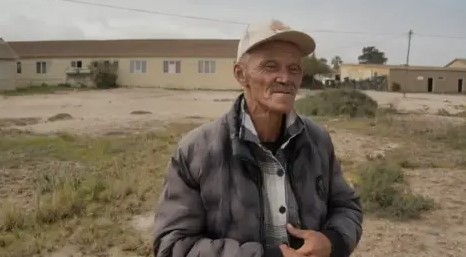
In the coastal town of Alexander Bay, abandoned mining buildings stand as reminders of a once-thriving industry. Andries Josephs worked in the diamond sector until he lost his job two decades ago.
“There is no work here anymore,” he says. “People have stopped moving forward. Everything has gone backwards.”
As mining declined, jobs disappeared. Today, unemployment is extremely high, and opportunities are scarce.
Decline of Infrastructure and Services
Near the old mine site, only a few houses remain. A church building stands in disrepair, and a hospital with broken windows provides only basic care.
According to the local authority’s development plan, water and electricity systems are in poor condition. Roads are damaged, making access to healthcare and services difficult.
Diamonds Known Long Before Prospectors Arrived
More than a century ago, prospectors discovered diamonds south of the Orange River, triggering a rush that transformed the region. But for the Nama people, the gems were never a secret.
“In our family, children were taught to count using diamonds,” says Martinus Fredericks.
Now 60 years old, Fredericks was appointed leader of the Nama people in South Africa in 2012. He says elders asked him to lead the fight for the return of their ancestral land.
A Long Struggle for Recognition
Fredericks believes land ownership is central to restoring dignity and opportunity for the Nama people. While legal victories brought recognition, practical benefits remain limited.
“Our land created wealth, but our people remain poor,” he says.
The Nama community continues to push for meaningful land restitution, environmental repair, and economic inclusion.
What Comes Next
As South Africa debates land reform and historical injustice, the situation in Namaqualand highlights the gap between legal recognition and lived reality.
For the Nama people, the struggle is not only about land. It is about identity, opportunity, and a future built on the wealth their ancestors once protected.