
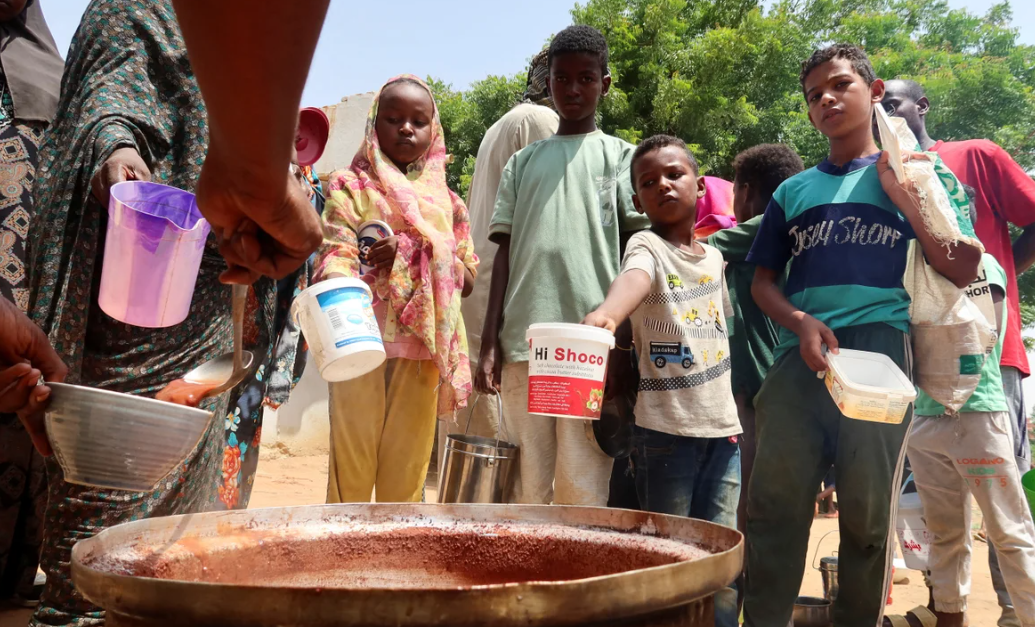
Sudan’s network of community kitchens, which have become a critical lifeline for millions of people caught in the ongoing civil war, is on the brink of collapse, a report by Islamic Relief warns. The crisis comes as famine conditions continue to spread in conflict zones, according to the UN-backed Integrated Food Security Phase (IPC) network.
A Lifeline in a War-Torn Country
For more than two years, Sudan has been ravaged by fighting between the national army and the paramilitary Rapid Support Forces (RSF). The conflict has created what the UN calls the world’s largest humanitarian crisis, with over 24 million people facing acute food shortages.
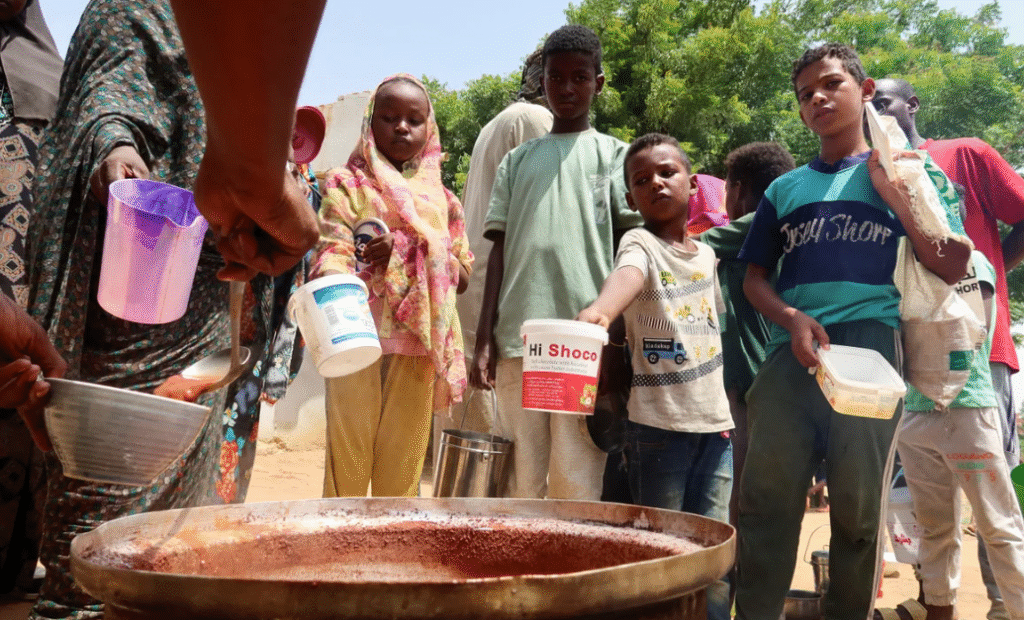
In this dire situation, locally run community kitchens have become essential, particularly in areas inaccessible to international aid organizations. These kitchens rely on volunteers from all walks of life, teachers, engineers, young people, working tirelessly to feed their communities.
Funding and Operational Challenges
Financial fragility is the most pressing concern. The kitchens were once supported in part by USAID, but funding cuts earlier this year have forced them to rely mainly on donations from the Sudanese diaspora.
A volunteer described the struggle:
“Before March, we had a small, regular stream that let us plan. We knew we could serve at least one meal a day. Now? There were 10 days this month when we didn’t know if we could cook the next day. The uncertainty is worse than having nothing.”
Operational challenges compound the financial stress. Many kitchens struggle with unsafe water, limited firewood, and disruptions to food supplies caused by blockades, insecurity, and looting. Aid deliveries are often obstructed by bureaucratic delays or outright denial by both warring parties.
Conflict Zones Hit Hardest
The situation is most severe in the besieged cities of el-Fasher in western Darfur and Kadugli in South Kordofan. These areas are largely cut off from commercial supplies and international aid, and famine conditions have been confirmed by the IPC. In el-Fasher, community kitchens have been reduced to serving animal fodder in the wake of RSF advances.
Even in relatively safer areas like Omdurman, near the capital Khartoum, the demand often exceeds supply. The city has become a hub for displaced people, and kitchens are forced to ration meals, leaving volunteers emotionally drained.
A volunteer explained:
“One day we had to tell a mother there was no food left for her two children. She didn’t cry, she just looked deflated. I went home feeling ashamed that I had food when her children did not.”
Emergency Response Rooms: A Community-Led Model
Many kitchens operate alongside Emergency Response Rooms (ERRs), locally managed networks that fill gaps left by failing government services and limited international aid. The ERRs were recently nominated for a Nobel Prize for their innovative approach to shifting aid closer to affected communities.
However, after nearly three years of continuous operation, volunteers are experiencing burnout and increasing danger. As territories change hands, kitchen operators are sometimes targeted by armed groups who see them as collaborating with the opposing side.
Communication and Security Risks
Limited communications exacerbate the crisis. Mobile money, used to transfer funds for food procurement, is often lost or stolen at checkpoints. Internet blackouts make coordinating operations nearly impossible. Some volunteers have even been killed while carrying out their work, according to Islamic Relief.
Shihab Mohamed Ali, of Islamic Relief Sudan, warned:
“My biggest fear is that in six months, the community will be completely exhausted. We are all getting poorer and angrier.”
A Growing Humanitarian Crisis
If no intervention occurs, most community kitchens could shut down within six months, leaving millions without access to basic nutrition. With famine spreading and the war showing no signs of abating, Sudan’s community-driven food networks face a perilous future.
This crisis highlights the resilience and vulnerability of local initiatives, demonstrating how ordinary citizens have become essential lifelines amid a conflict that has overwhelmed government and international responses.